
The Wound Healing Assay, also known as the Scratch Assay, is a simple and effective method for studying cell migration and tissue regeneration. A scratch or gap is created in a confluent cell monolayer, and the movement of cells into the gap is monitored over time. The assay is widely used in research on tissue repair, cancer metastasis, and cell-migration dynamics.
A scratch is made across a confluent cell monolayer using a pipette tip or another suitable tool, creating a defined gap in the cell layer.
Cells at the wound edges migrate inward after the scratch is created. This process is monitored over time to assess the rate of wound closure.
Time-lapse microscopy is used to capture wound closure, and wound area is quantified at defined time points to determine cell-migration rates.
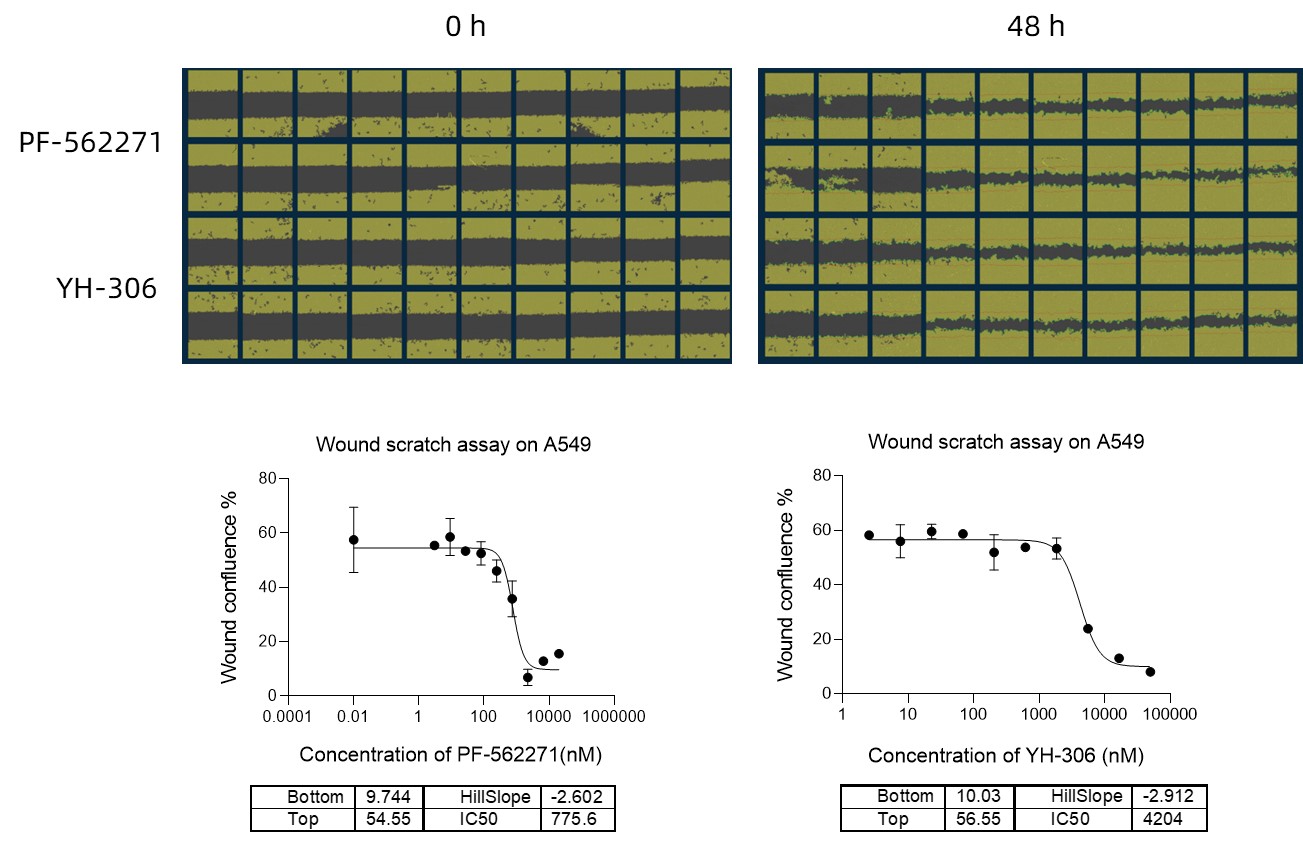
Study tissue-repair and wound-healing processes, including the effects of growth factors, cytokines, and other bioactive compounds.
Evaluate the migratory potential of cancer cells and investigate mechanisms of metastasis and the effects of anti-cancer drugs on cell motility.
Screen compounds that promote or inhibit cell migration, supporting the development of therapies for wound healing, fibrosis, and cancer.
Advanced imaging captures wound closure with high spatial resolution, enabling precise quantification of cell migration.
Cell type, culture conditions, and treatment regimens can be adjusted to address specific cell-migration questions.
Image-analysis software measures wound area, migration rate, and cell behavior to support reliable and reproducible results.
Experienced scientists can support experimental design, assay execution, and data interpretation.
We value your inquiries and are here to provide you with tailored solutions for your drug discovery and development needs. Whether you have questions, require more information, or are interested in discussing potential collaborations, our team of experts is just a message away.
Feel free to reach out to us.

Address: Bldg 16, Yd 18, Kechuang 13th St, Etown, Tongzhou Dist, Beijing, 100176, China
Email: marketing@ice-biosci.com
Tel:+86-10-67809840


Get a quote

Go top