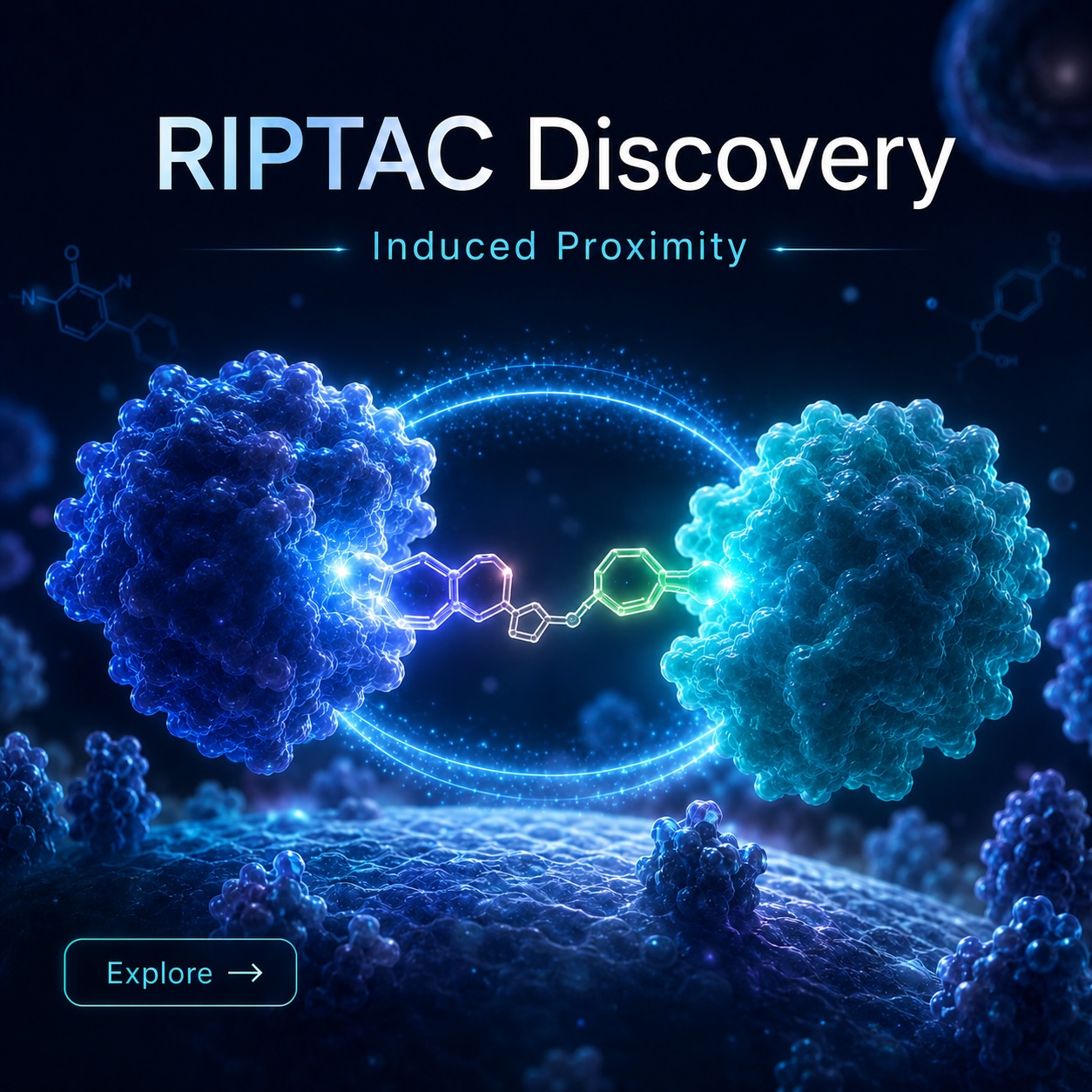

Thermal Shift Assay (TSA) is a versatile technique for assessing protein stability under different conditions. Using extrinsic fluorescent dyes, TSA monitors thermal unfolding by detecting fluorescence changes as proteins denature. The assay supports protein–ligand interaction studies, buffer optimization, formulation development, identification of stabilizing conditions, and broader drug-discovery workflows.
Proteins normally exist in a native, folded state. As temperature increases, molecular motion intensifies and proteins begin to unfold, exposing hydrophobic regions. An extrinsic fluorescent dye binds to these newly exposed regions, causing fluorescence intensity to increase. When the temperature reaches the melting temperature (Tm), unfolded proteins aggregate and fewer hydrophobic sites remain available for dye binding. The dye returns to the aqueous environment and fluorescence is quenched, producing a characteristic increase–decrease melting curve. Plotting fluorescence intensity against temperature enables determination of the protein Tm.
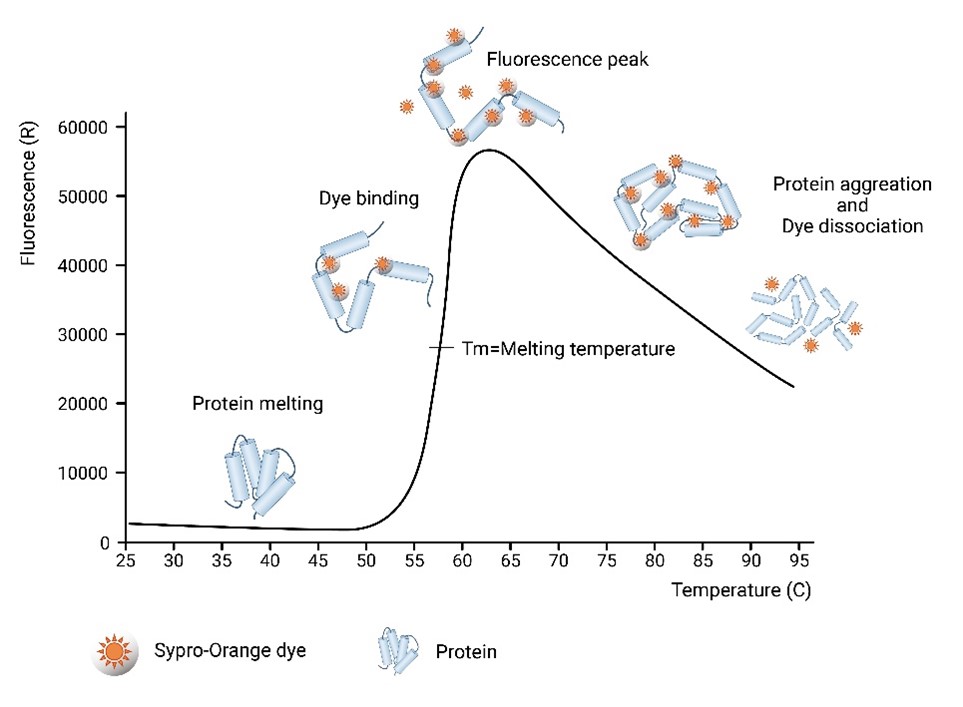
Principles of the Thermal Shift Assay. Fluorescence changes caused by dye binding and quenching are used to generate a protein melting curve and determine Tm.
Using the QuantStudio 7 Flex system, the service provides precise detection of protein melting temperatures (Tm) for stability assessment.
Supports buffer optimization, ligand screening, and formulation studies across protein-stability and drug-discovery workflows.
Compatibility with 96- and 384-well plates enables efficient and cost-effective analysis of multiple samples or experimental conditions.
We value your inquiries and are here to provide you with tailored solutions for your drug discovery and development needs. Whether you have questions, require more information, or are interested in discussing potential collaborations, our team of experts is just a message away.
Feel free to reach out to us.

Address: Bldg 16, Yd 18, Kechuang 13th St, Etown, Tongzhou Dist, Beijing, 100176, China
Email: marketing@ice-biosci.com
Tel:+86-10-67809840


Get a quote

Go top