

The Transwell Migration Assay and its specialized variants, the Chemotaxis Assay and the Invasion Assay, are essential tools for studying cell motility and invasiveness in diverse biological contexts. These assays use a Transwell insert consisting of an upper and lower chamber separated by a porous membrane. The common principle is to observe and quantify cell movement through this membrane under defined experimental conditions.
Principle: Measures the general ability of cells to migrate through a porous membrane. Cells are seeded in the upper chamber and move toward medium in the lower chamber, which may contain nutrients but no specific chemoattractant.
Method: After a defined incubation period, cells that have migrated to the lower membrane surface are fixed, stained, and quantified to measure intrinsic cell motility and responses to the surrounding environment.
Principle: Evaluates directed cell movement in response to chemical signals, known as chemoattractants, present in the lower chamber.
Method: Cells are placed in the upper chamber while the lower chamber contains chemoattractant-containing medium. Migration toward the chemoattractant is quantified to study chemotaxis, an important process in immune responses and cancer metastasis.
Principle: Extends the migration model by introducing an extracellular-matrix-like barrier, such as Matrigel, on the porous membrane. Cells must degrade the barrier before migrating through the pores.
Method: Cells are seeded in the upper chamber over the ECM-like barrier, and their ability to invade through the matrix and migrate toward the lower chamber is assessed after incubation.
Chemotaxis assays used in drug discovery measure cell migration in response to a chemical stimulus. Cells are placed in a 96-well plate containing a porous membrane, and movement toward a chemoattractant is quantified, often through cellular ATP content. This format supports the evaluation of compounds that influence cell migration in areas such as inflammation and oncology. Cell type, chemoattractant selection, and other assay conditions can affect the observed response.

Schematic of the Transwell chemotaxis assay principle.

Chemotaxis assays on various targets. The graph illustrates the effects of different drugs on chemotaxis assays involving specific chemokine receptors. RS 504393, a selective CCR2 antagonist, is tested in THP-1 cells. AZD2098, a potent and selective CCR4 antagonist, is evaluated in CD4+ Treg cells. The CCR8 antagonist AZ084 is tested in H9 cells, while the GPR84 antagonist GLPG1205 is assessed in neutrophils. Cell migration percentage is plotted against drug concentration to evaluate the ability of these compounds to modulate chemotaxis.
The Invasion Assay is particularly relevant for studying cancer-cell invasiveness and the effectiveness of anti-metastatic treatments. By requiring cells to penetrate an ECM-like barrier before passing through the membrane, the assay models an additional step beyond basic cell migration.
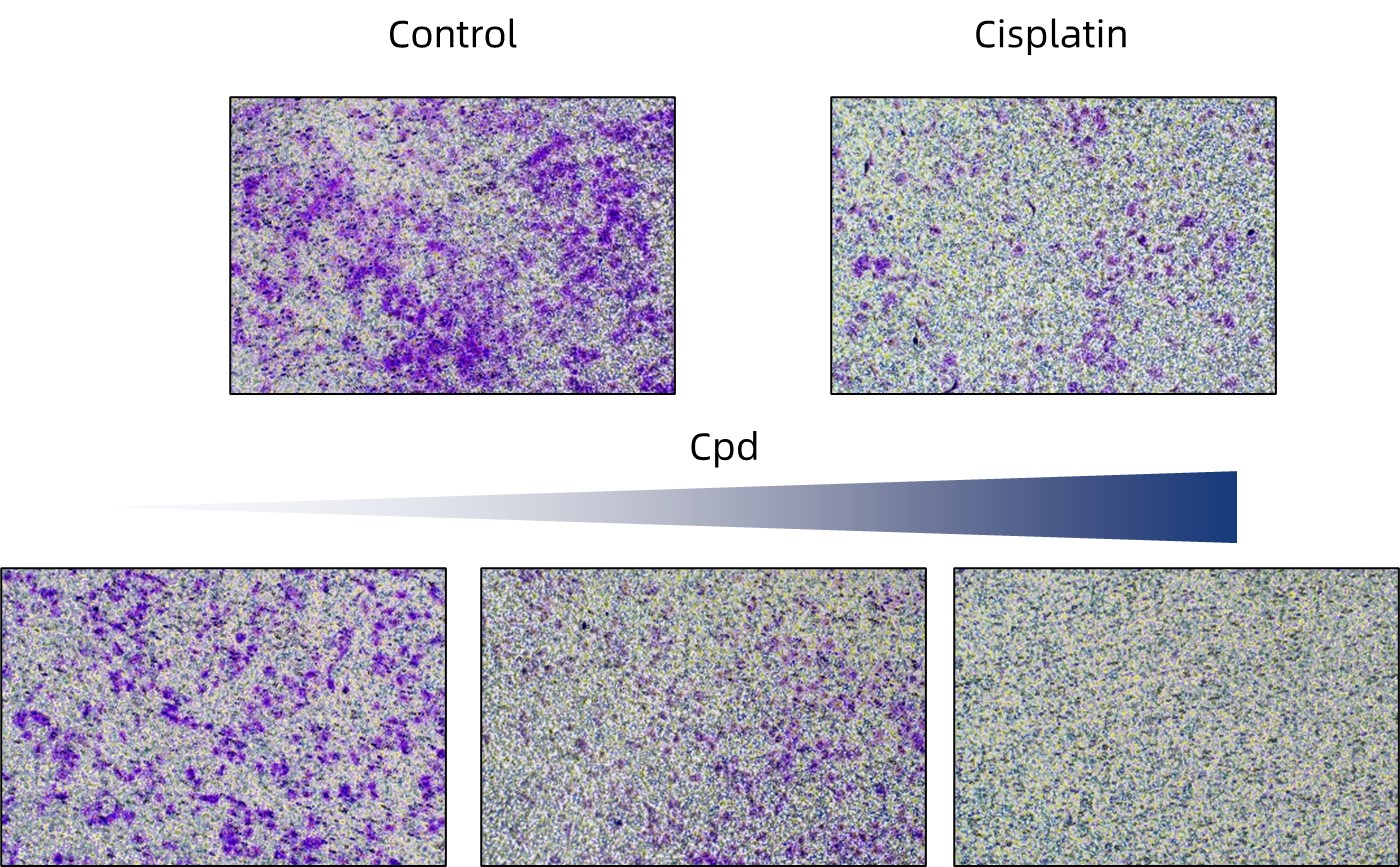
All three assays help investigate different aspects of cancer-cell behavior, from basic motility to complex invasion mechanisms.
The Chemotaxis Assay supports studies of immune-cell migration toward infection sites or tumor microenvironments.
These assays evaluate the effects of therapeutic compounds on cell movement, chemotaxis, and invasiveness, supporting anti-cancer and anti-inflammatory drug development.
We value your inquiries and are here to provide you with tailored solutions for your drug discovery and development needs. Whether you have questions, require more information, or are interested in discussing potential collaborations, our team of experts is just a message away.
Feel free to reach out to us.

Address: Bldg 16, Yd 18, Kechuang 13th St, Etown, Tongzhou Dist, Beijing, 100176, China
Email: marketing@ice-biosci.com
Tel:+86-10-67809840


Get a quote

Go top