Dual-payload ADCs and combination therapy regimens have emerged as promising strategies to overcome payload resistance and deepen anti-tumor efficacy. As ADC programs continue to expand, systematic identification of synergistic payload pairs has become a practical question for next-generation ADC design, resistance-overcoming strategy development, and translational combination prioritization.
In this case study, 126 drug pairs composed of three classic TOPO1 ADC payloads and a diversified panel of anti-cancer agents were primarily screened with fixed-ratio in ADC/payload-resistant cell lines and their corresponding parental counterparts. DDR pathway targets emerged as the dominant synergy class, and selected hits were further validated via full matrix combination studies across an expanded panel of resistant and wild-type cancer cell lines.
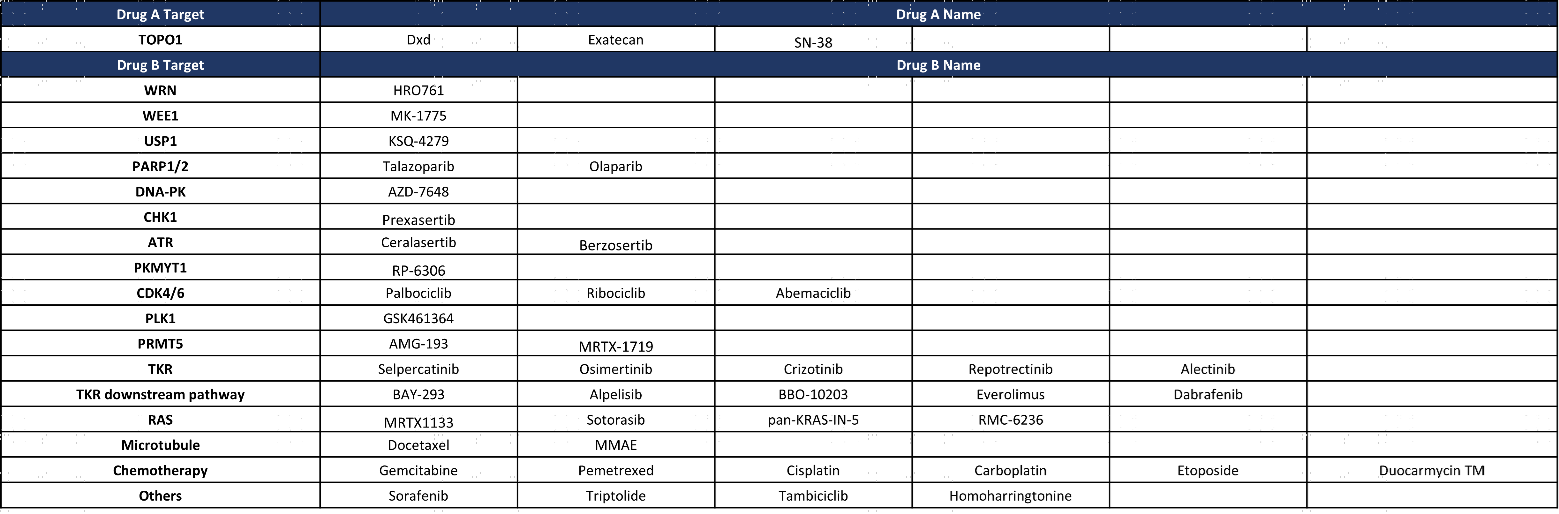
To systematically identify synergistic combinations that overcome acquired resistance to ADC payloads, we designed a focused dual-payload pairs screening library. The screening uses three clinically validated TOPO1 inhibitor payloads as Drug A: deruxtecan (Dxd), exatecan, and SN-38. The Drug B library consisted of 42 candidates spanning multiple target families, including DDR pathway, cell-cycle regulators, RAS/MAPK signaling inhibitors, epigenetic modulators, chemotherapy backbones and other modalities.
In total, 126 drug pairs were screened with fixed-ratio in parallel across ADC/payload-resistant cell lines and their corresponding parental cell lines, using 3-day cell proliferation assays as the primary functional readout to identify synergistic combinations.
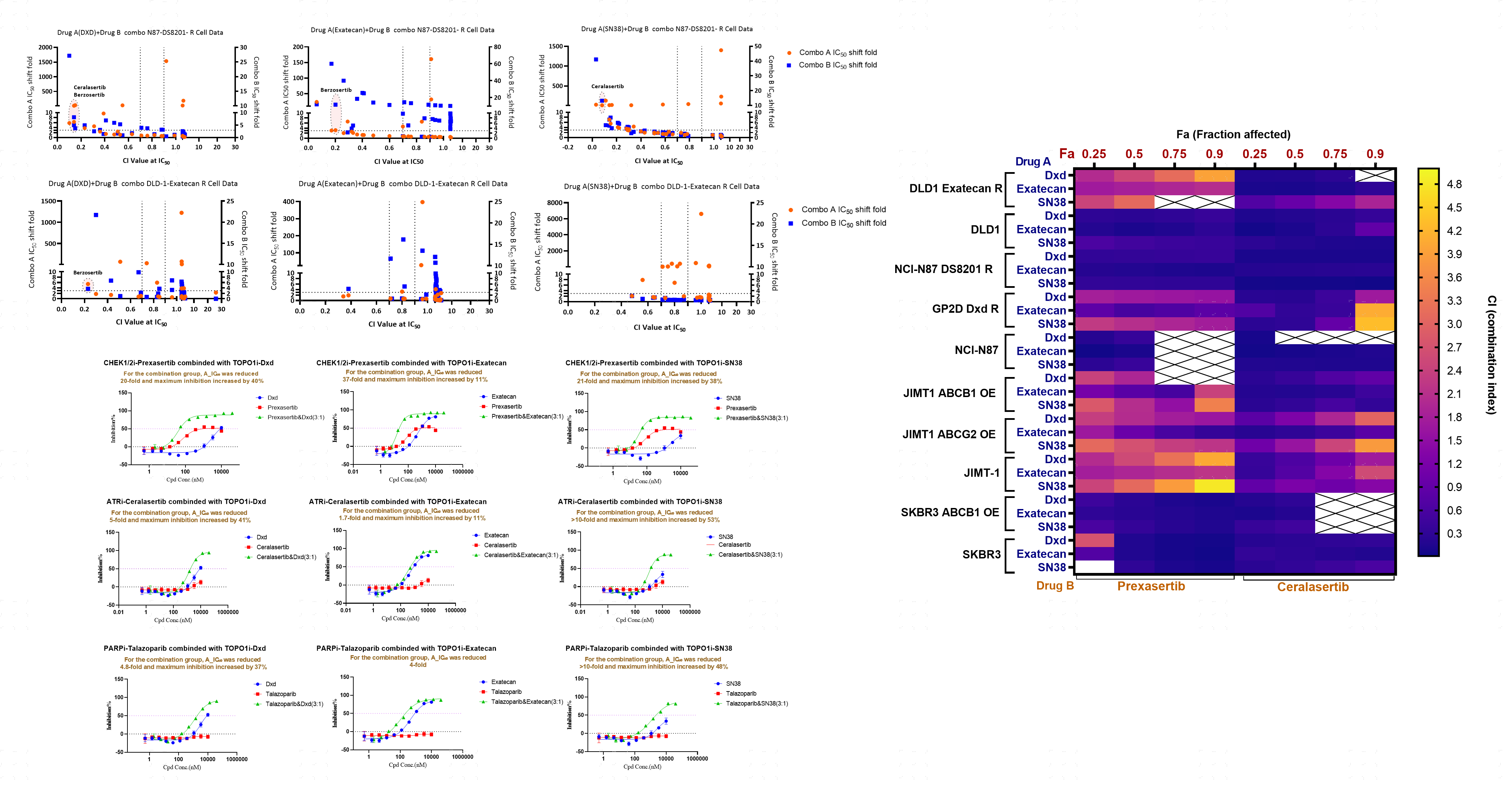
Primary screening results were classified using IC50 shift versus monotherapy. DDR-associated targets and TOPO1 inhibitors exhibited significant synergy in ADC resistant models and parental comparator lines.
Among the DDR hits, ATR inhibitors (Berzosertib, Ceralasertib), CHK1/2 inhibitor (Prexasertib) and PARP inhibitor (Talazoparib) emerged as particularly robust and reproducible signals when combined with TOPO1 inhibitors (Dxd, Exatecan, SN38). Marked left-shifts of IC50 (≥3-fold) are evident throughout, signifying potent synergy and partial reversal of ADC resistance. These data provide mechanistic support for dual-payload ADC strategies that co-deliver DDRi and TOPO1i payloads to overcome acquired resistance to TOPO1-targeted ADCs.
To confirm the primary screening findings, selected pairs advanced to matrix combination studies in expanded resistant cell line panels using both fixed-ratio and full matrix designs. Synergy was further quantified using HSA and ZIP scoring models.
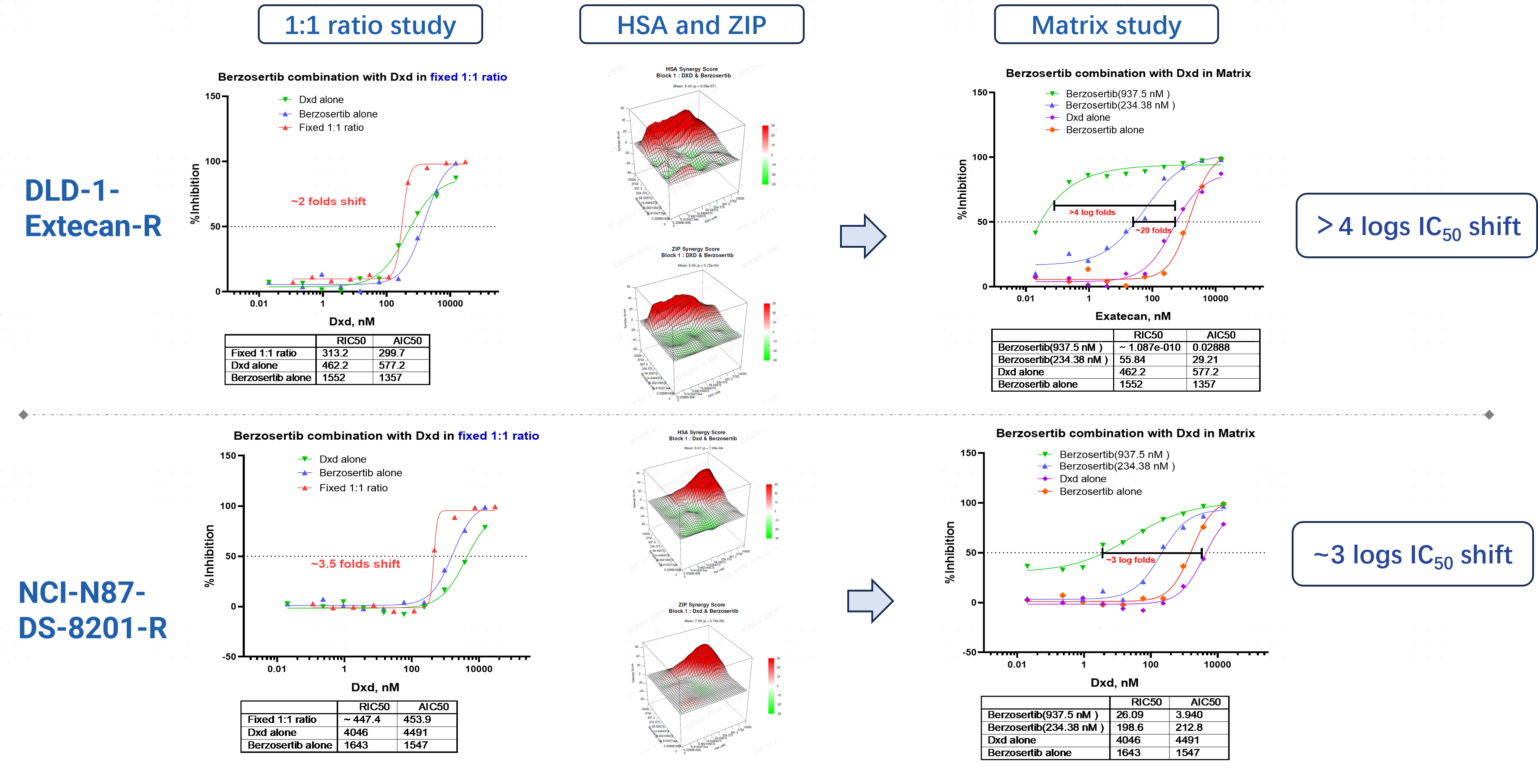
Berzosertib, an ATR/ATM inhibitor, was profiled across resistant models. In DLD-1/Exatecan R cells, the Berzosertib+Dxd combination achieved a ZIP synergy score of 5.56 and an HSA score of 9.43, with IC50 shifts exceeding 4 log units relative to monotherapy. In NCI-N87/DS-8201 R cells, the same pair yielded about 3 logs IC50 shift relative to monotherapy, a ZIP score of 7.58 and an HSA score of 6.61.
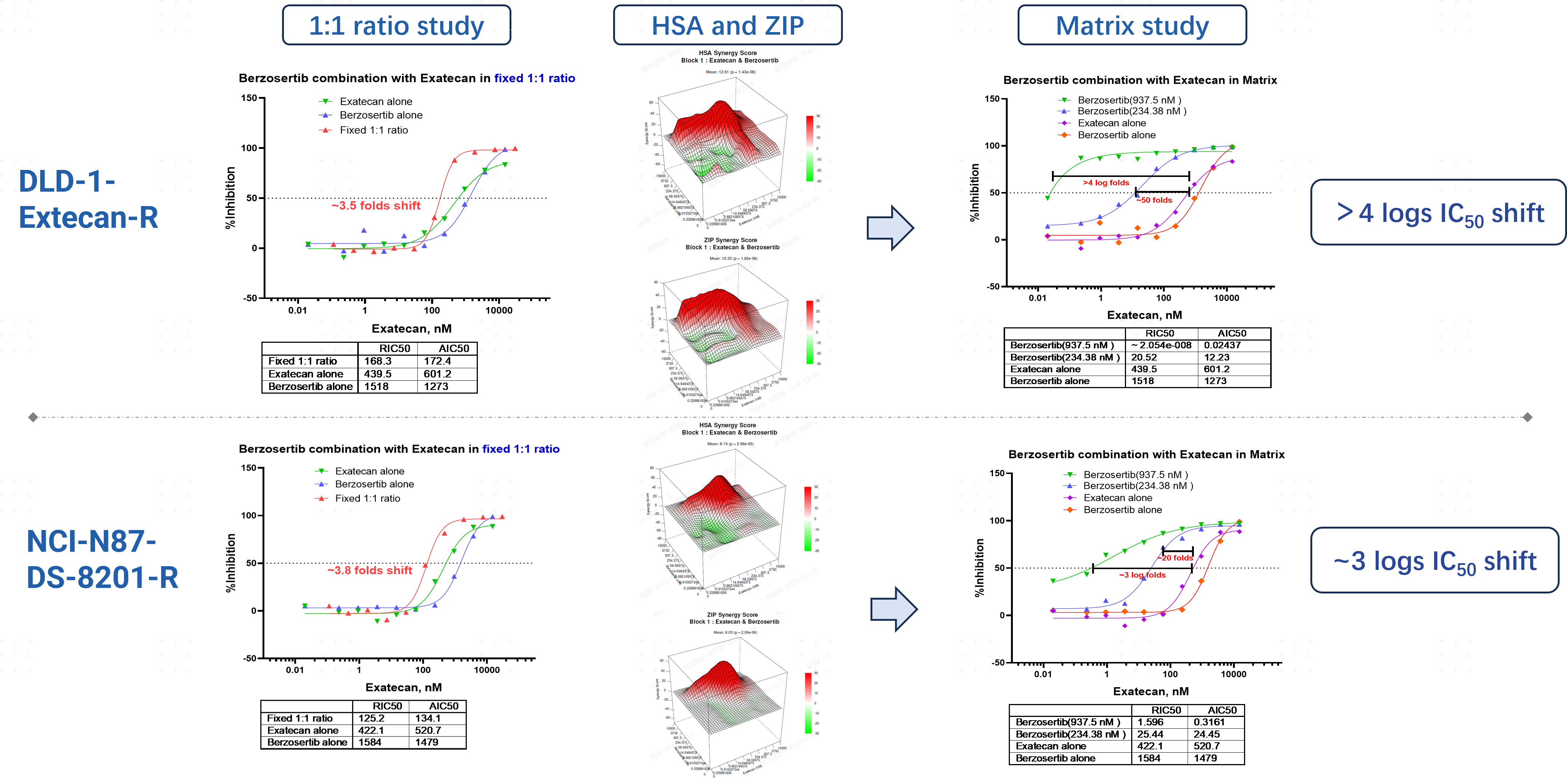
Berzosertib + Exatecan combination showed even stronger synergy. In DLD-1/Exatecan R cells, ZIP and HSA scores reached 10.33 and 12.61, respectively. In NCI-N87/DS-8201 R cells, corresponding scores were 8.03 (ZIP) and 8.13 (HSA). Across both cell lines, IC50 shifts of 3–4 log units were observed, supporting the conclusion that ATR pathway inhibition broadly synergizes with multiple Topo I inhibitor chemotypes.
The ATR inhibitor Ceralasertib was tested in combination with Dxd and SN38 in NCI-N87-DS8201-R cells. Both combinations showed about 3-log IC50 shifts in the matrix study. For the Dxd+Ceralasertib pair in NCI-N87/DS-8201-R cells, matrix analysis yielded a ZIP synergy score of 11.84 and an HSA synergy score of 10.31, both consistent with strong synergistic activity. The SN-38+Ceralasertib pair showed similarly robust scores, with ZIP and HSA values of 10.05 and 11.19, respectively.
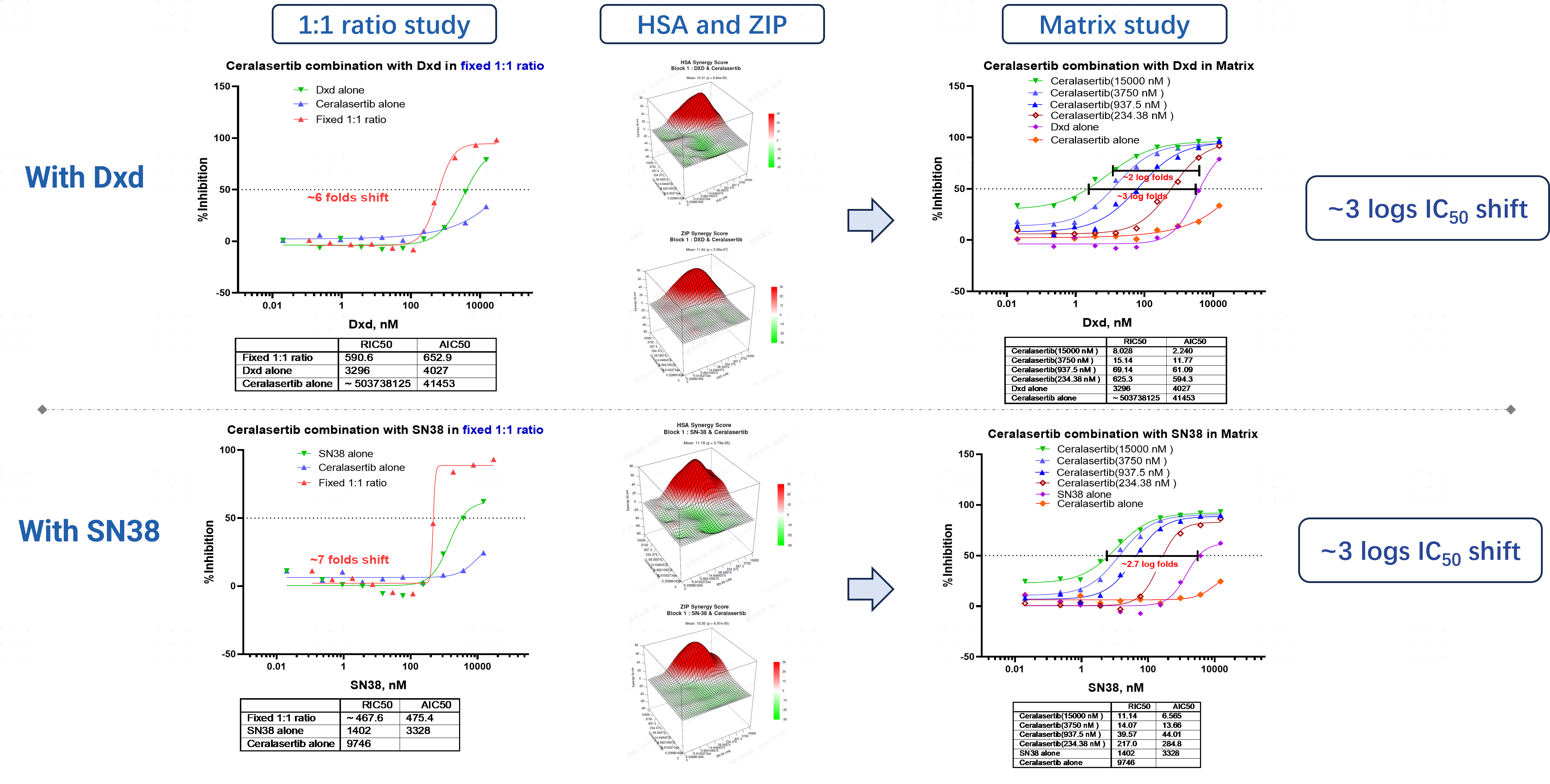
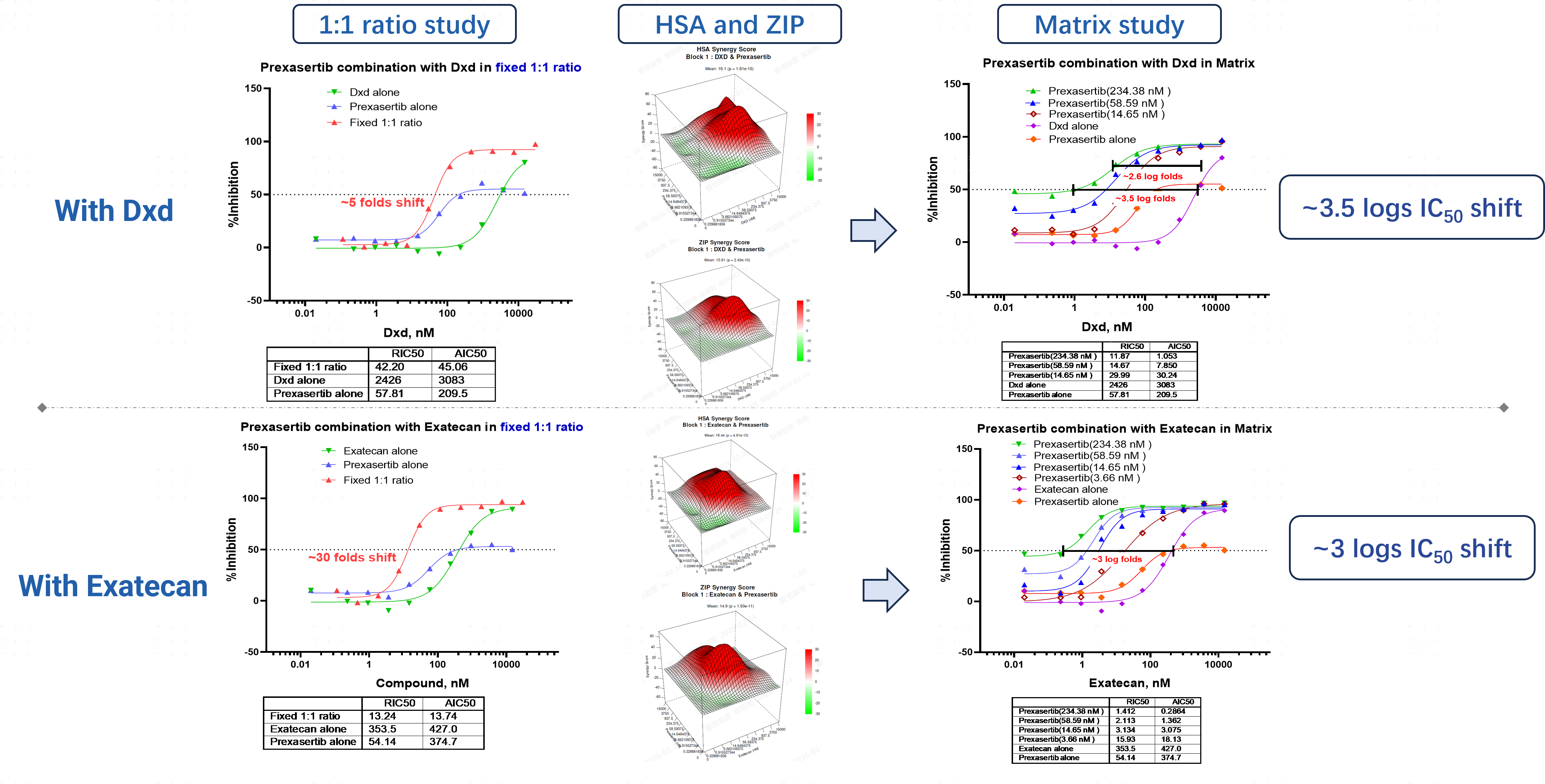
The CHK1 inhibitor Prexasertib represented another high-value hit from the primary screening. In validation studies, Prexasertib combinations consistently ranked among the strongest synergistic pairs across Topo I payloads tested. The SN-38+Prexasertib pair achieved an HSA score of 18.44 and a ZIP score of 14.9. This magnitude of synergy suggests that CHK1 blockade may be especially effective at abrogating G2/M checkpoint adaptation in Topo I–resistant cells, preventing repair of payload-induced DNA lesions and driving enhanced cytotoxicity.
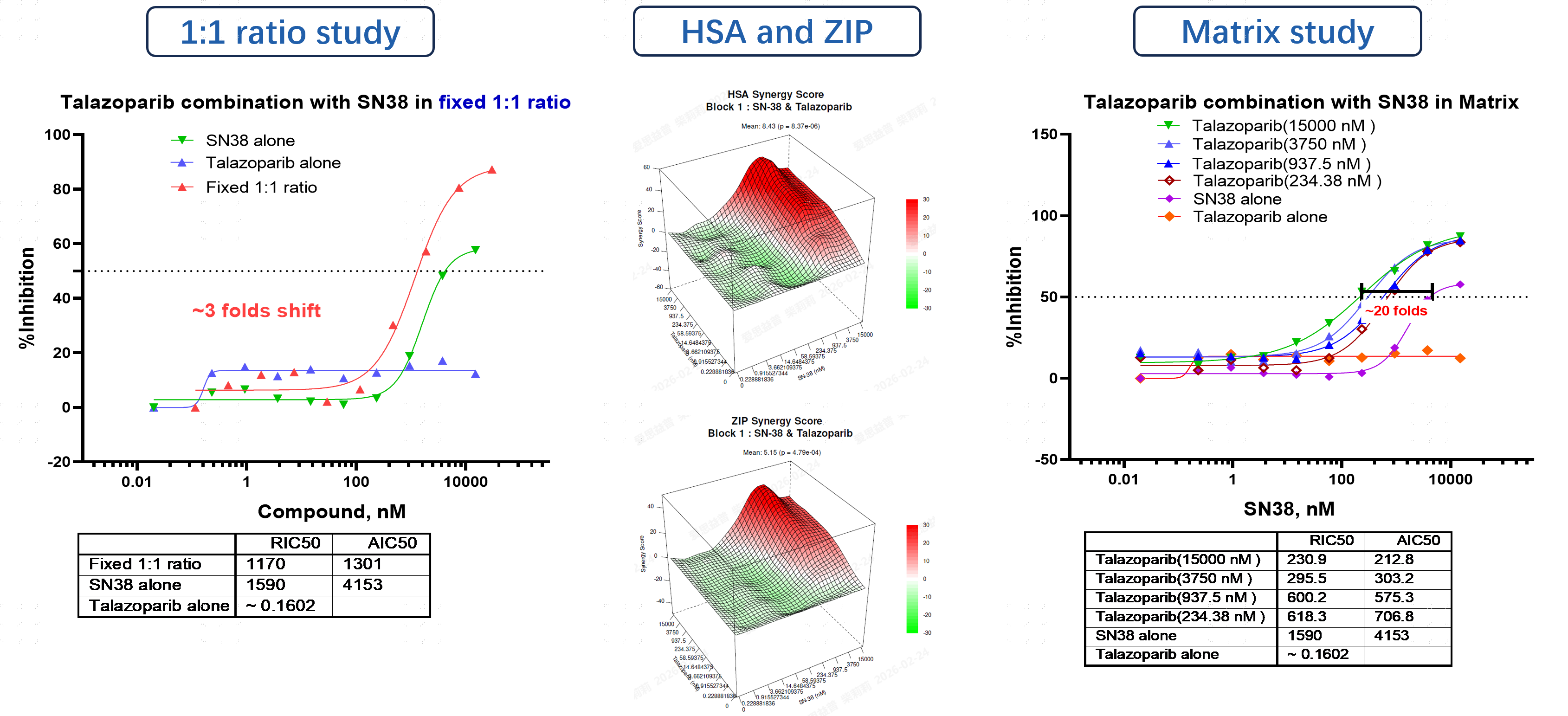
PARP inhibition was also evaluated as a combination partner, given the established role of PARP in the base excision repair response to Topo I–induced DNA damage. In the NCI-N87/DS-8201-R model, Talazoparib combined with SN-38 produced a 20-fold IC50 shift in matrix analysis, yielding a ZIP score of 5.15 and an HSA score of 8.43.
While the synergy magnitude was more modest than that observed with ATR or CHK1 inhibitors, the PARP–Topo I combination remains biologically and clinically relevant, particularly in contexts where homologous recombination deficiency or other DNA repair lesions may further amplify the effect.
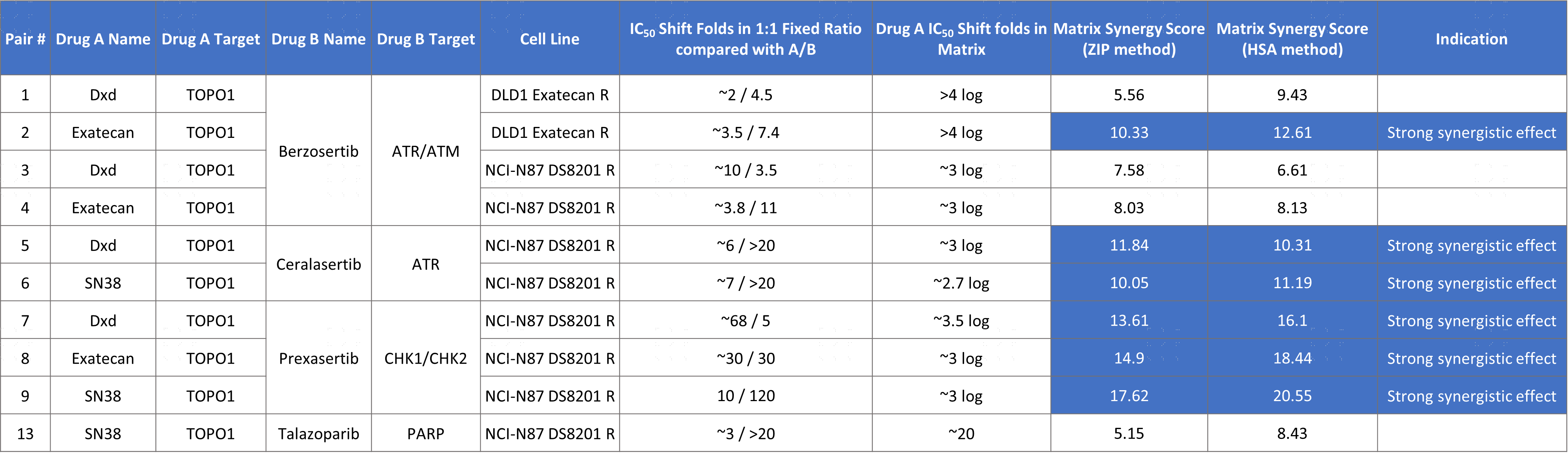
The matrix combination screening dataset was summarized in Table 1. DDR inhibitors (ATR, CHK1, PARP) combined with TOPO1 inhibitors (Dxd, Exatecan, SN38) consistently showed synergy across DLD-1/Extecan R and NCI-N87/DS8201 R resistant models.
While resistant cell line models are particularly informative for identifying combinations that can overcome drug resistance, it is also important to validate that synergistic payload combinations show activity across a broader panel of cancer cell lines. This helps confirm that the effect is not limited to a specific resistant clone and provides insight into which tumor types may be most responsive to dual-payload strategies.
To assess the generalizability of the synergy signals, selected pairs were profiled in a panel of wild-type colorectal cancer cell lines, including COLO 320 DN, HT-55, LS411N, NCI-H747, SW480, SW620, T84, and SW948. Almost all pairs were classified as showing strong synergistic effect in these cell lines. The matrix combination screening dataset was summarized in Table 2.
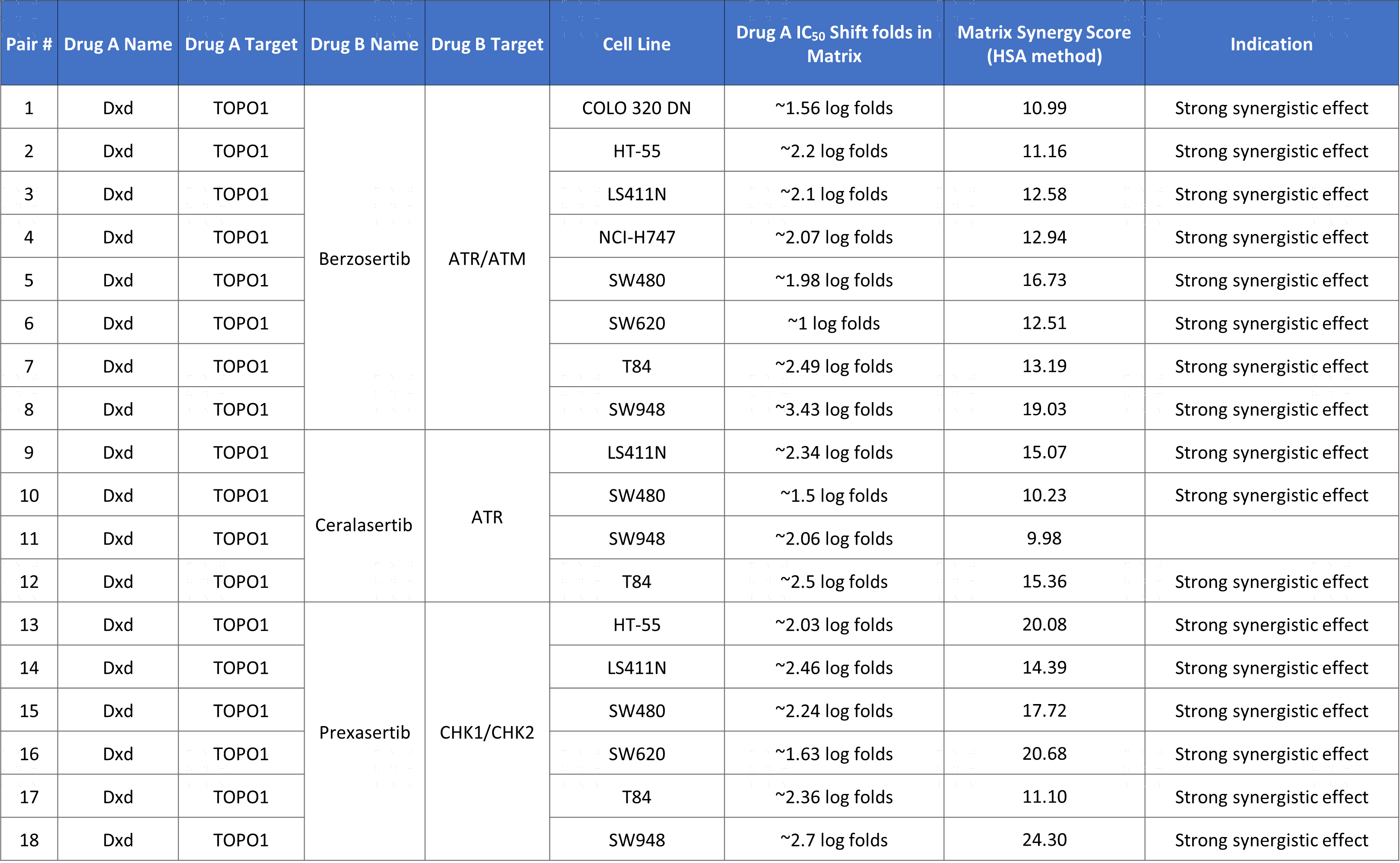
The consistency of synergy across multiple colorectal cancer cell lines suggests that DDR + topoisomerase I inhibitor combinations may have broad utility in this tumor type. This broadens the clinical application scope of dual-payload and combination strategies.
This dual payload pairs screening case study demonstrates a systematic, high-throughput approach to identifying and validating synergistic payload combinations for ADC resistance settings. Leveraging a panel of 126 dual payload pairs evaluated across both wild-type cancer cell lines and established ADC/payload-resistant derivatives, we applied ZIP and HSA synergy scoring to prioritize the most robust interactions. The data establish DDR pathway inhibition (particularly ATR and CHK1/2) combined with TOPO1 inhibitor payloads as a strongly synergistic axis across resistant and wild type cancer models.
For ADC discovery, these findings support the rationale for dual-payload ADC designs that co-deliver a TOPO1 inhibitor and a DDR-targeting agent. Such designs may extend the therapeutic window of ADCs by maintaining efficacy in cells that have acquired resistance to TOPO1 payload monotherapy through DNA damage response adaptation.
2026-08-20
2026-05-22
2026-05-21
2026-05-13
We value your inquiries and are here to provide you with tailored solutions for your drug discovery and development needs. Whether you have questions, require more information, or are interested in discussing potential collaborations, our team of experts is just a message away.
Feel free to reach out to us.

Address: Bldg 16, Yd 18, Kechuang 13th St, Etown, Tongzhou Dist, Beijing, 100176, China
Email: marketing@ice-biosci.com
Tel:+86-10-67809840


Get a quote

Go top