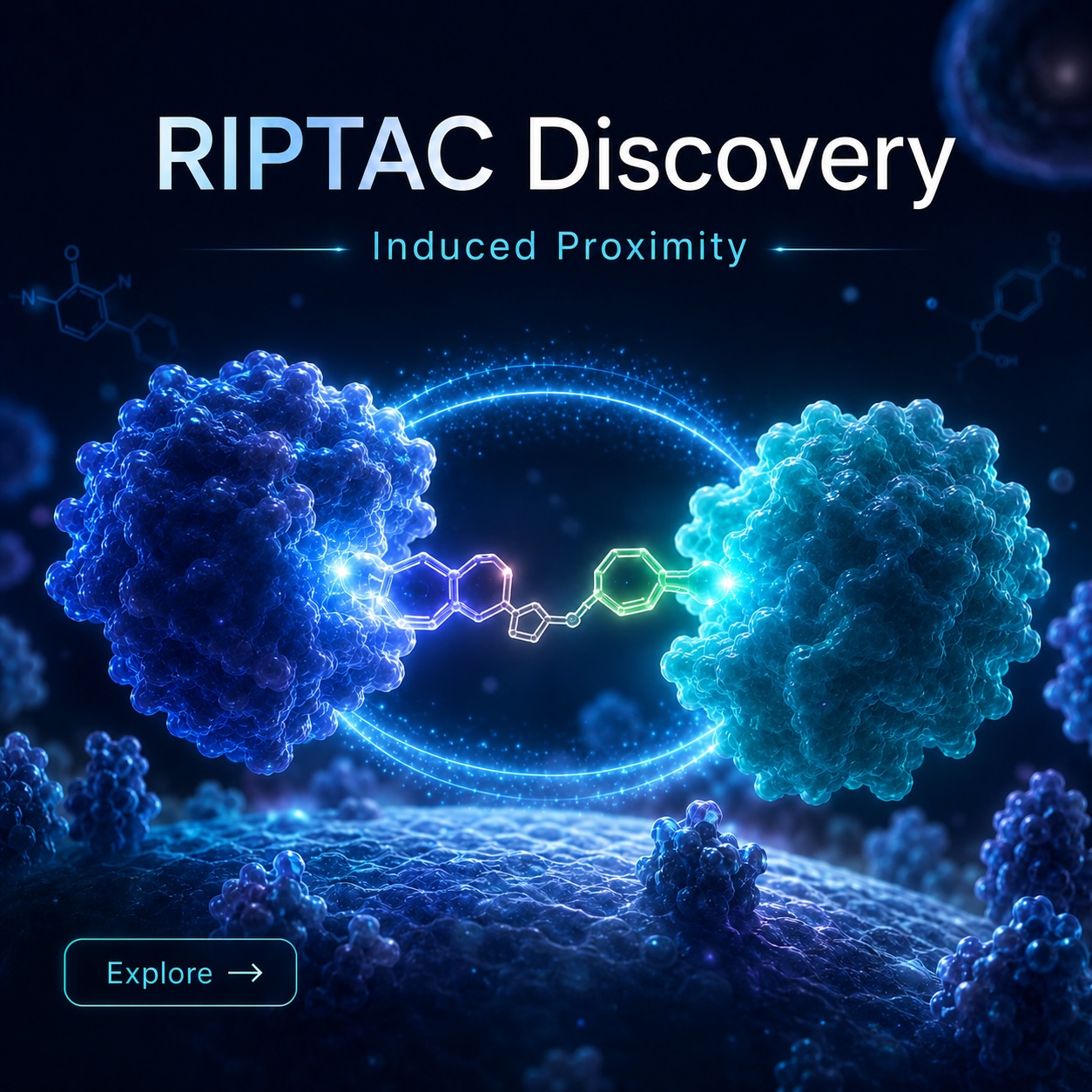

Integrated support for RIPTAC discovery, from ternary-complex modeling to biochemical, biophysical, and cellular validation.
ICE Bioscience provides a connected workflow that combines in silico design, orthogonal assay development, target-engagement analysis, and downstream functional evaluation to support more informed RIPTAC program decisions.
RIPTACs, or Regulated Induced Proximity Targeting Chimeras, are bifunctional molecules designed to bring a tumor-selective target protein into proximity with a pan-essential protein. In target-positive cells, this induced proximity can disrupt essential protein function and drive selective cancer-cell killing while sparing healthy cells with low or absent target expression.
As an emerging induced-proximity modality, RIPTAC discovery requires more than routine assay execution. Productive programs depend on ternary-complex hypothesis generation, structure-informed design, orthogonal validation, and biologically meaningful downstream readouts.
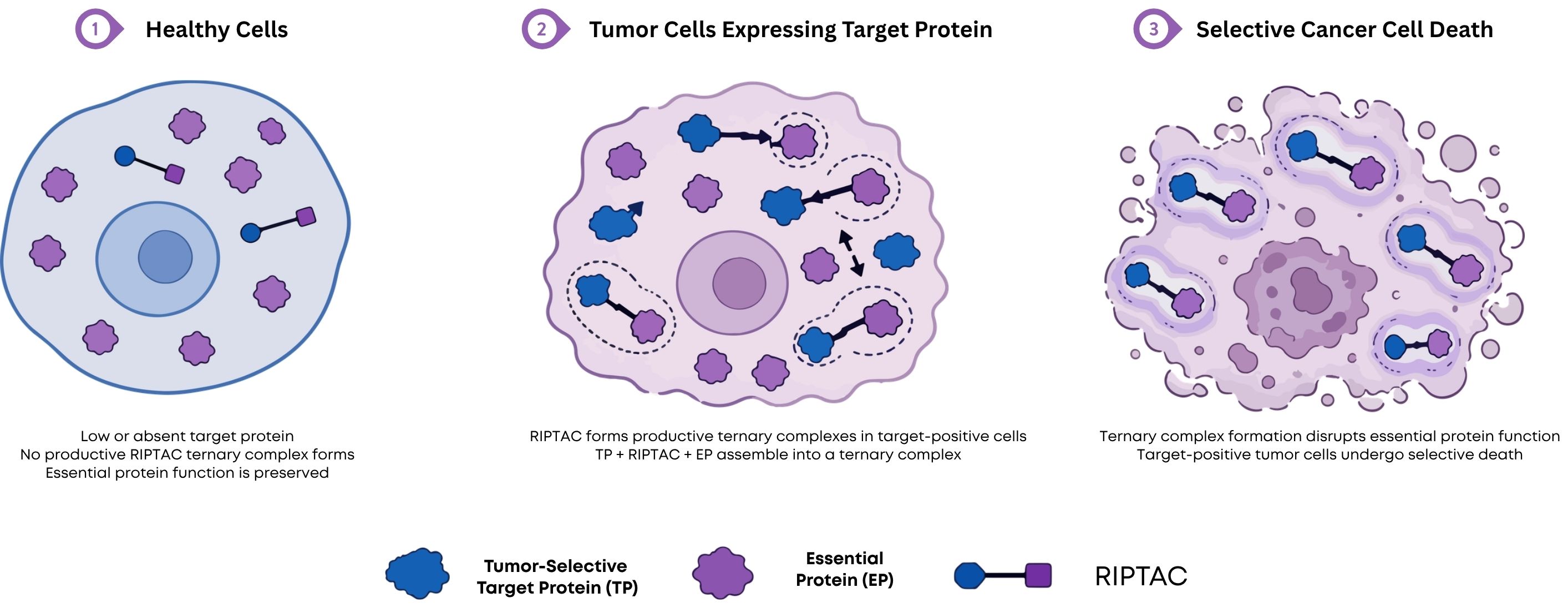
Structure-guided RIPTAC design supported by docking, pose comparison, and molecular-dynamics analysis to prioritize productive ternary-complex hypotheses for downstream testing.
Biophysical and biochemical assays characterize binary binding, ternary-complex formation, and mechanism-related activity through formats including HTRF, TR-FRET, SPR, and spectral shift.
Cell-based target engagement and functional readouts connect ternary-complex biology to pharmacological outcome, with additional support for safety panels, ADME, PK/PD, and selected in vivo studies.
We value your inquiries and are here to provide you with tailored solutions for your drug discovery and development needs. Whether you have questions, require more information, or are interested in discussing potential collaborations, our team of experts is just a message away.
Feel free to reach out to us.

Address: Bldg 16, Yd 18, Kechuang 13th St, Etown, Tongzhou Dist, Beijing, 100176, China
Email: marketing@ice-biosci.com
Tel:+86-10-67809840


Get a quote

Go top