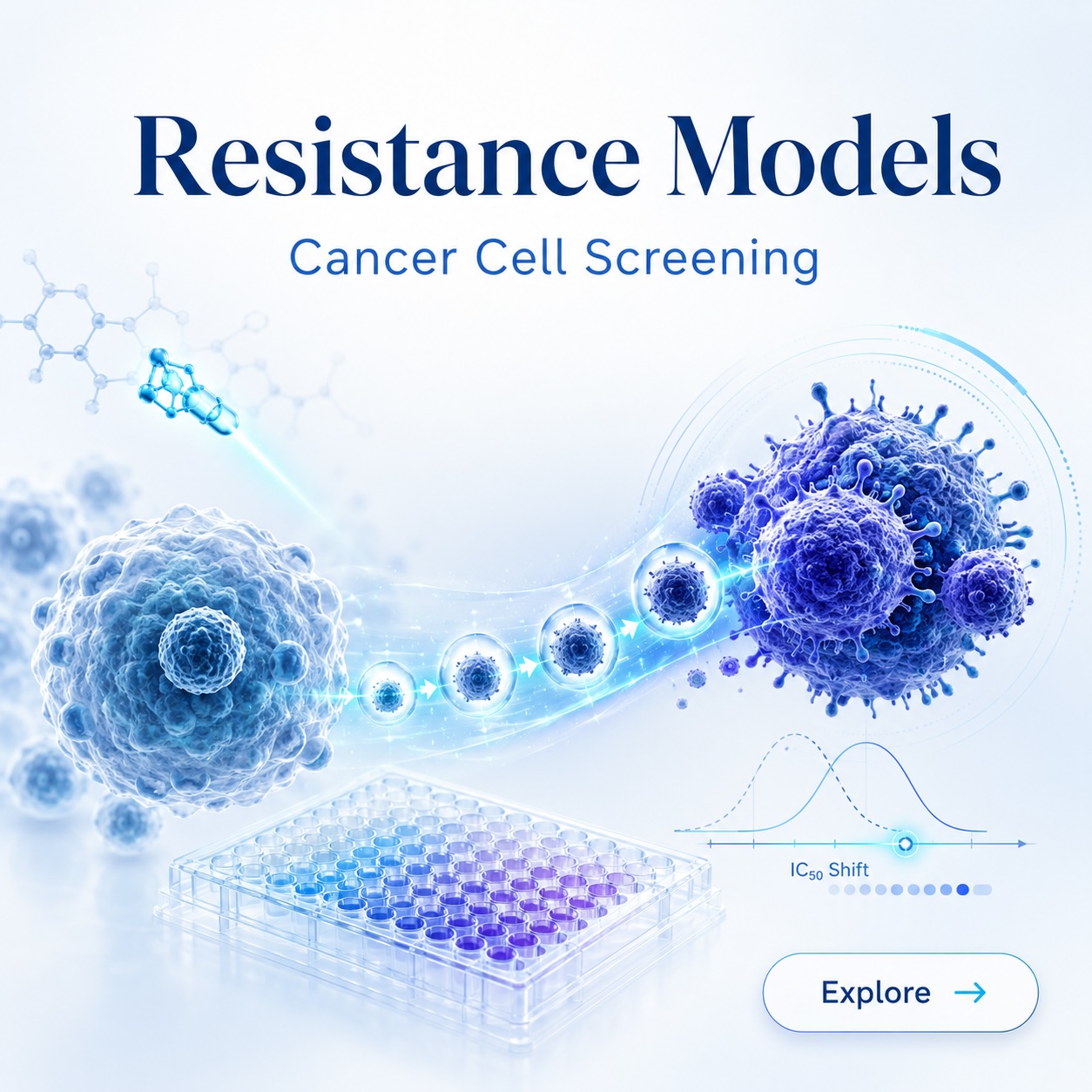
Drug resistance remains a major challenge in modern drug development, limiting the durability of targeted therapies and oncology treatments. Cancer cells can develop adaptive mechanisms that reduce treatment sensitivity, including target alteration, pathway reactivation, drug-efflux activation, metabolic rewiring, DNA damage response changes and phenotypic plasticity.
Conventional drug-sensitive cell models may not capture clinically relevant resistance phenotypes, limiting evaluation of therapeutic durability, resistance vulnerabilities and potential combination strategies.
ICE Bioscience provides customized drug-resistant cell-line development and screening services using continuous or stepwise drug exposure and gene-editing-based approaches. These models support mechanism-of-resistance studies, biomarker discovery, vulnerability screening and next-generation therapeutic strategy evaluation.
ADC/Payload-driven resistance models ↗ are developed against payload classes such as topoisomerase I inhibitors or tubulin inhibitors to support cross-resistance evaluation and strategy development for ADC programs.
Validated KRAS inhibitor-resistant cell models ↗ support resistance-focused pharmacology, comparative parental-versus-resistant profiling, and mechanism-of-action investigations.
Optional analysis can include ABCG2 or ABCB1 transporter checks, target and pathway markers, and transcriptomic comparison of parental and resistant lines.
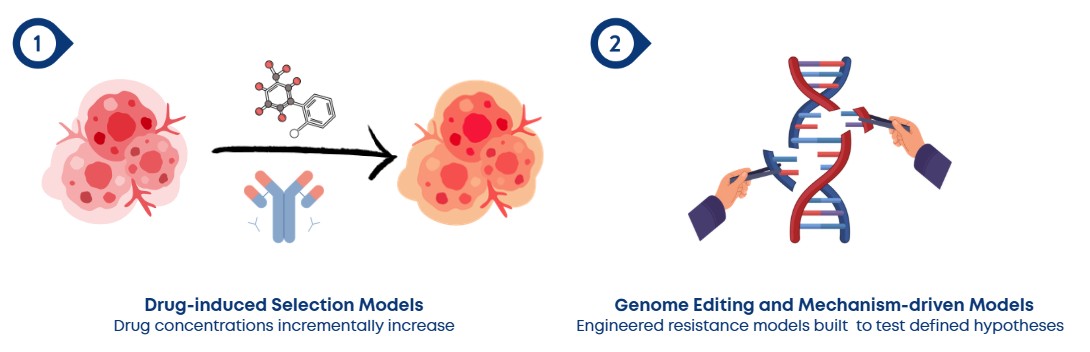
Drug-resistant cell-line development workflow.
We value your inquiries and are here to provide you with tailored solutions for your drug discovery and development needs. Whether you have questions, require more information, or are interested in discussing potential collaborations, our team of experts is just a message away.
Feel free to reach out to us.

Address: Bldg 16, Yd 18, Kechuang 13th St, Etown, Tongzhou Dist, Beijing, 100176, China
Email: marketing@ice-biosci.com
Tel:+86-10-67809840


Get a quote

Go top