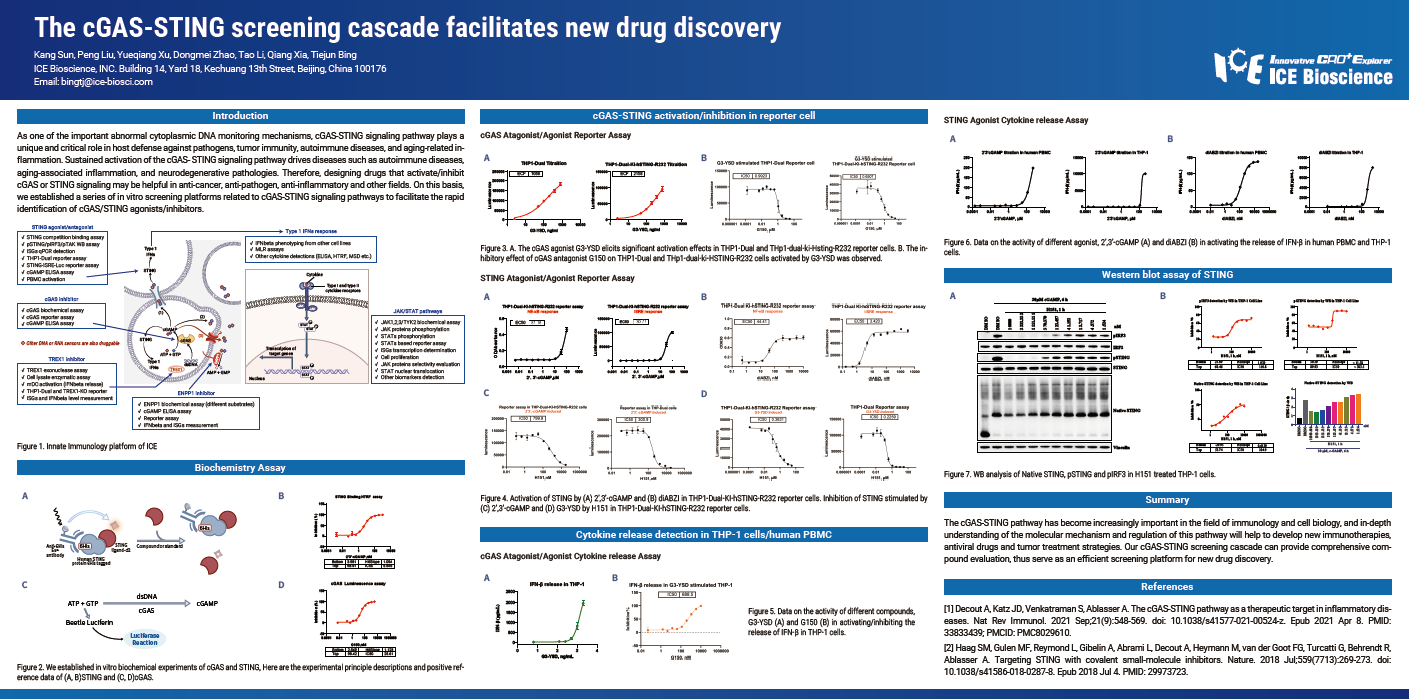
As one of the important abnormal cytoplasmic DNA monitoring mechanisms, cGAS-STING signaling pathway plays a unique and critical role in host defense against pathogens, tumor immunity, autoimmune diseases, and aging-related inflammation. Sustained activation of the cGAS- STING signaling pathway drives diseases such as autoimmune diseases, aging-associated inflammation, and neurodegenerative pathologies. Therefore, designing drugs that activate/inhibit cGAS or STING signaling may be helpful in anti-cancer, anti-pathogen, anti-inflammatory and other fields. On this basis, we established a series of in vitro screening platforms related to cGAS-STING signaling pathways to facilitate the rapid identification of cGAS/STING agonists/inhibitors.
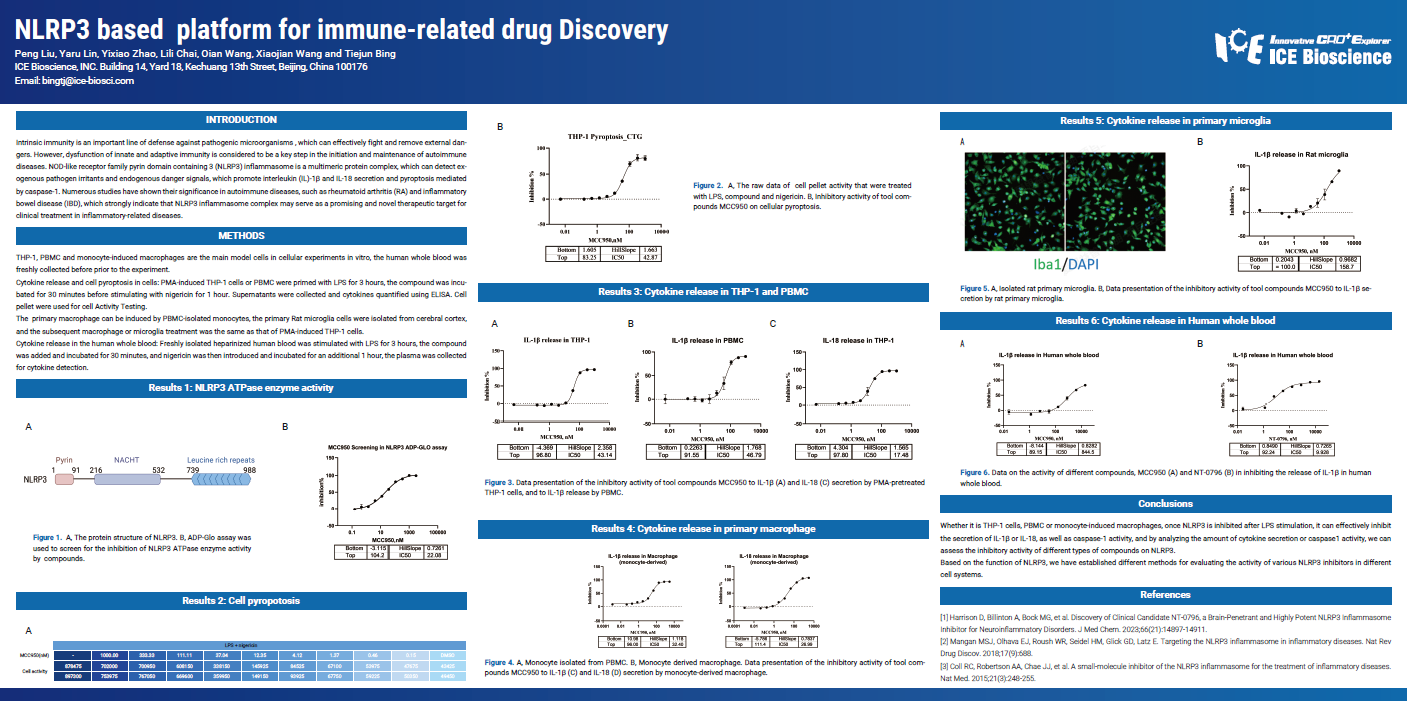
Intrinsic immunity is an important line of defense against pathogenic microorganisms, which can effectively fight and remove external dangers. However, dysfunction of innate and adaptive immunity is considered to be a key step in the initiation and maintenance of autoimmune diseases. NOD-like receptor family pyrin domain containing 3 (NLRP3) inflammasome is a multimeric protein complex, which can detect exogenous pathogen irritants and endogenous danger signals, which promote interleukin (IL)-1β and IL-18 secretion and pyroptosis mediated by caspase-1. Numerous studies have shown their significance in autoimmune diseases, such as rheumatoid arthritis (RA) and inflammatory bowel disease (IBD), which strongly indicate that NLRP3 inflammasome complex may serve as a promising and novel therapeutic target for clinical treatment in inflammatory-related diseases.
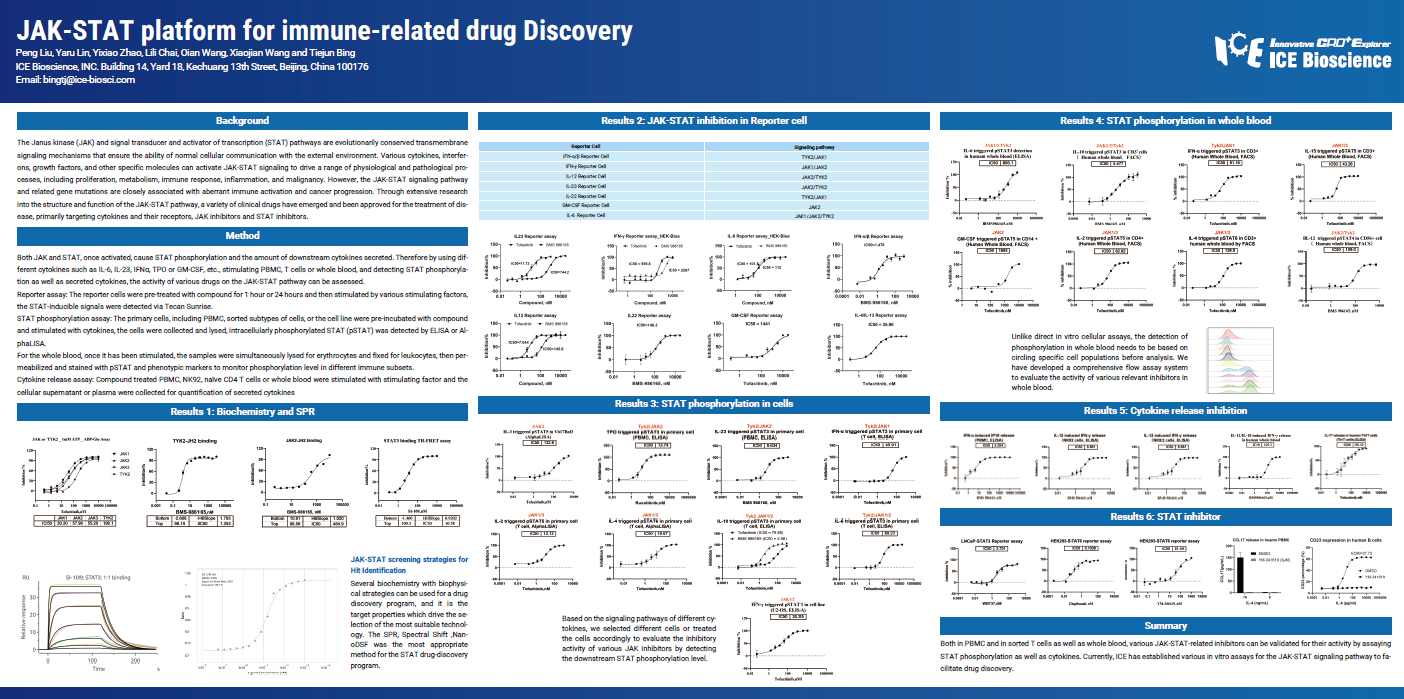
The Janus kinase (JAK) and signal transducer and activator of transcription (STAT) pathways are evolutionarily conserved transmembrane signaling mechanisms that ensure the ability of normal cellular communication with the external environment. Various cytokines, interferons, growth factors, and other specific molecules can activate JAK-STAT signaling to drive a range of physiological and pathological processes, including proliferation, metabolism, immune response, inflammation, and malignancy. However, the JAK-STAT signaling pathway and related gene mutations are closely associated with aberrant immune activation and cancer progression. Through extensive research into the structure and function of the JAK-STAT pathway, a variety of clinical drugs have emerged and been approved for the treatment of disease, primarily targeting cytokines and their receptors, JAK inhibitors and STAT inhibitors.
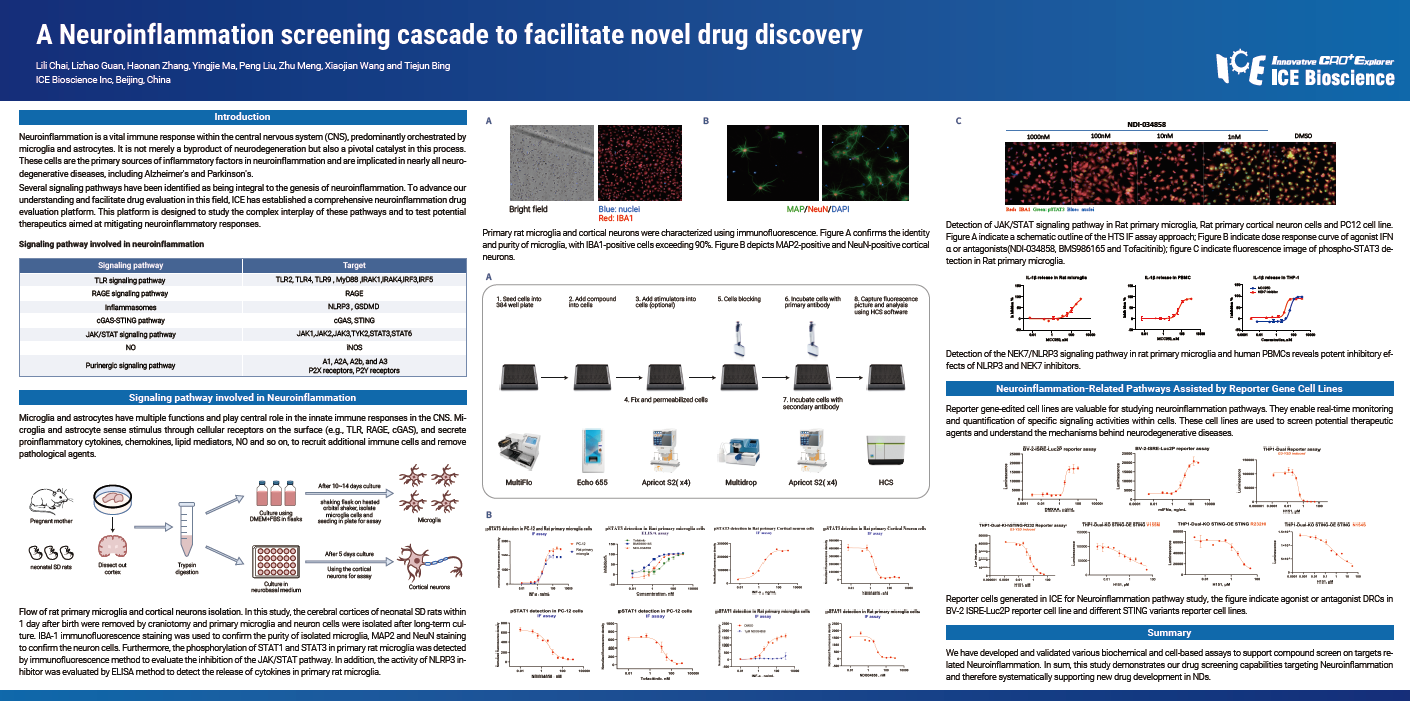
Neuroinflammation is a vital immune response within the central nervous system (CNS), predominantly orchestrated by microglia and astrocytes. It is not merely a byproduct of neurodegeneration but also a pivotal catalyst in this process. These cells are the primary sources of inflammatory factors in neuroinflammation and are implicated in nearly all neurodegenerative diseases, including Alzheimer's and Parkinson's.
Several signaling pathways have been identified as being integral to the genesis of neuroinflammation. To advance our understanding and facilitate drug evaluation in this field, ICE has established a comprehensive neuroinflammation drug evaluation platform. This platform is designed to study the complex interplay of these pathways and to test potential therapeutics aimed at mitigating neuroinflammatory responses.
Address: Bldg 16, Yd 18, Kechuang 13th St, Etown, Tongzhou Dist, Beijing, 100176, China
Email: marketing@ice-biosci.com
Tel:+86-10-67809840