LARGE ANIMAL IN VIVO MODELS
Large animal in vivo models serve as an indispensable translational pillar in the preclinical development of analgesic and antiemetic therapies, bridging rodent discovery research and human clinical trials. Unlike small laboratory animals, Beagle dogs, non-human primates (NHPs) and other large species closely recapitulate human pain signaling pathways, emetic reflex circuitry, drug metabolism profiles, and nervous system physiology. Notably, rodents lack a functional vomiting reflex, and their nociceptive regulatory mechanisms differ substantially from humans — making large animal studies far more predictive of clinical efficacy, pharmacodynamic behavior, and safety for pain and antiemetic drug programs.
ICE Bioscience's Large Animal Research Platform provides integrated preclinical pharmacology services focused on pain and emesis indications, with validated models available in NHPs and Beagle dogs. By combining standardized surgical techniques, clinically relevant disease models, quantitative functional assessments, and mechanistic analyses, we deliver comprehensive, robust solutions that translate early small animal findings into clinically actionable insights to accelerate candidate development.
Our multidisciplinary team brings deep, specialized expertise in large animal surgery, behavioral neuroscience, pain pharmacology, and translational biomarker evaluation. This focused capability base ensures high-quality, reproducible study outcomes tailored precisely to the needs of analgesic and antiemetic therapeutic development programs.
VALIDATED MODEL LIBRARY
ICE Bioscience offers a comprehensive suite of standardized, pharmacologically validated large animal in vivo models. All assays are benchmarked with approved reference compounds to ensure consistent performance, high reproducibility, and biologically meaningful results.
01Apomorphine-Induced Emesis Model in Beagle Dogs
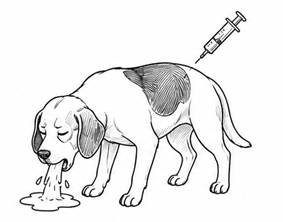
This model utilizes apomorphine, a potent dopamine receptor agonist, to induce a rapid and reproducible emetic response in Beagle dogs. It serves as a robust platform for evaluating the efficacy of novel anti-emetic compounds.
Emesis Model Schematic
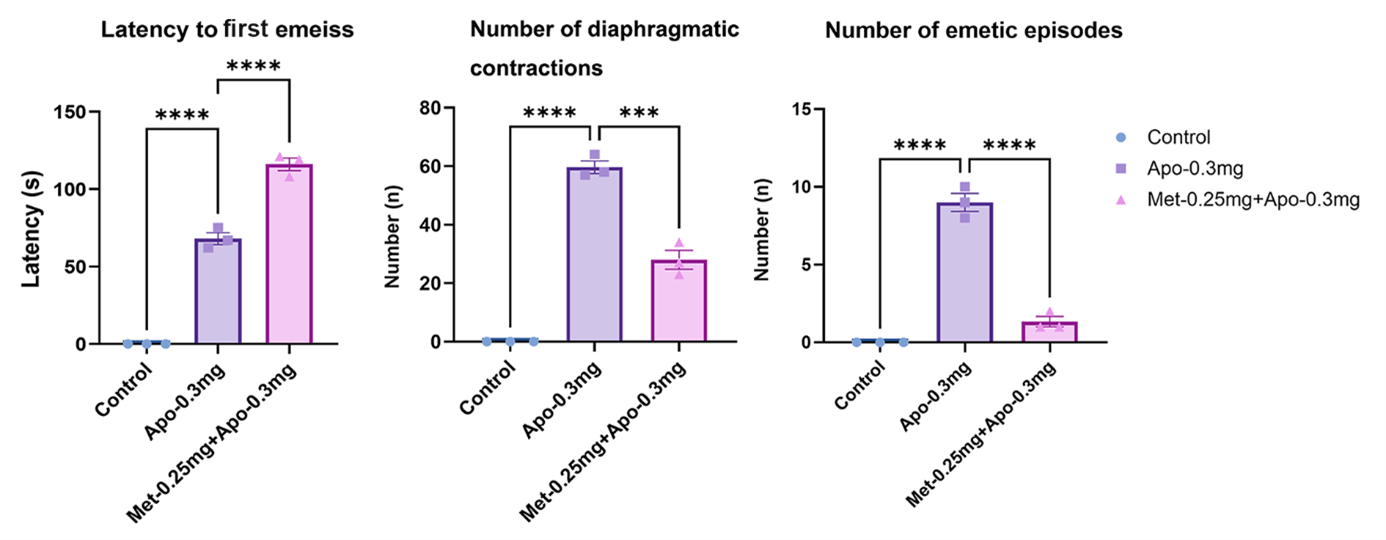
Apomorphine successfully induced a reproducible emetic response in Beagle dogs, characterized by shortened latency to first emesis and increased diaphragmatic contractions and emetic episodes. Metoclopramide effectively attenuated these emetic responses, validating the sensitivity and pharmacological responsiveness of the model.
02Plantar Incisional Pain Model in Beagle Dogs
This model simulates clinical post-operative pain through a standardized plantar incision in Beagle dogs (11–14 months old). It produces sustained mechanical allodynia, closely mirroring the pathophysiology of human post-surgical pain.
Plantar Incisional Pain Model Schematic
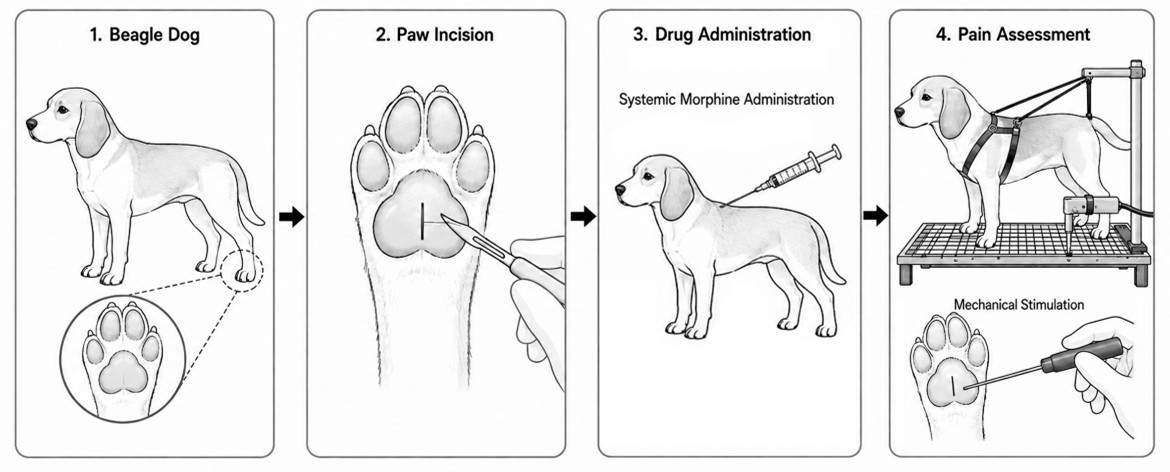
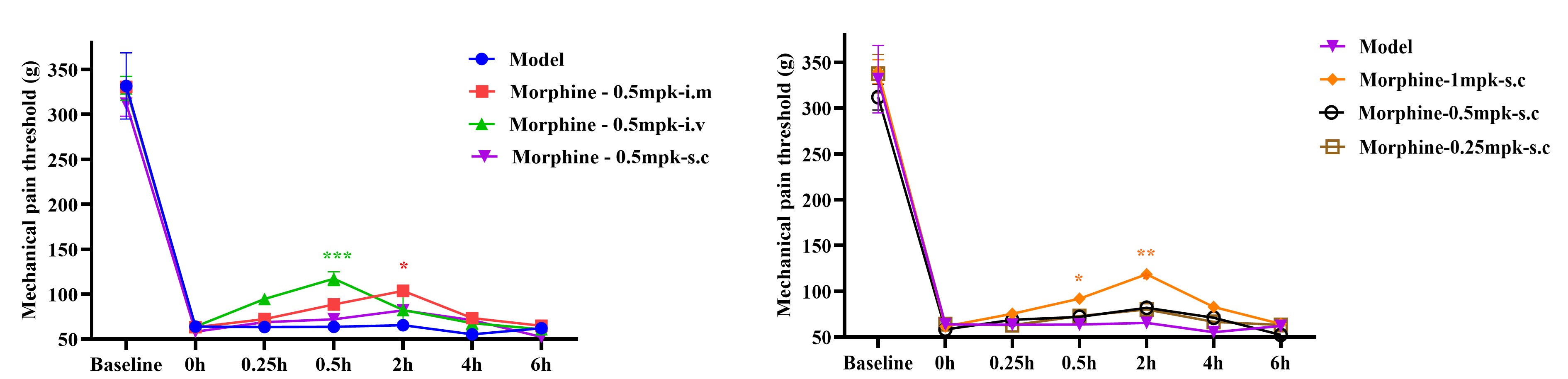
The model is validated using Morphine as a positive control across various administration routes and dose levels. Morphine delivered via three common administration routes elevated the mechanical pain threshold and subcutaneous Morphine exhibited clear dose-dependent analgesic efficacy. This model enables robust comparison of administration regimens, dose optimization, and efficacy ranking for novel postoperative analgesic candidates.
03Pain Assessment Models in Non-Human Primates
Our NHP pain evaluation platform covers both acute thermal nociception testing and persistent inflammatory pain modeling, providing highly translationally relevant tools for analgesic drug development.
Thermal Nociception (Tail-Flick) Model
This is an acute pain model, using graded thermal stimuli to assess thermal nociception and opioid sensitivity.
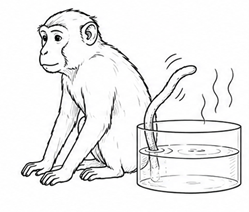
Thermal Nociception (Tail-Flick) Model Schematic
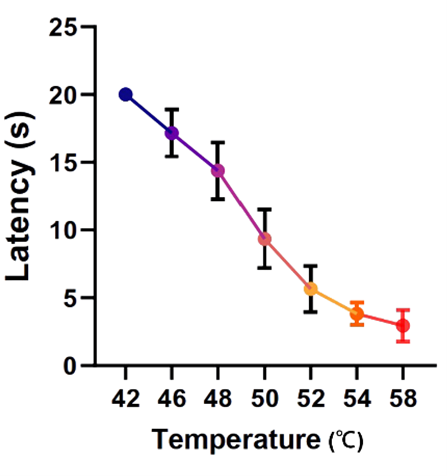
Systematic optimization of thermal stimuli identified 50–54°C as the optimal temperature range for reliable assessment of thermal nociception in female cynomolgus monkeys.
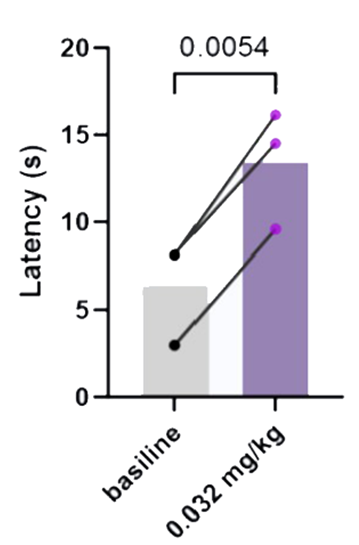
In rhesus monkeys, subcutaneous administration of butorphanol increased tail-flick latency 20 minutes after dosing under a 50°C thermal stimulus, demonstrating the sensitivity of the assay to pharmacological analgesic effects.
Formalin-Induced Inflammatory Pain Model
This is a persistent pain model that replicates the biphasic (acute and inflammatory) nature of clinical chemical-induced pain.
Formalin-Induced Inflammatory Pain Model Schematic
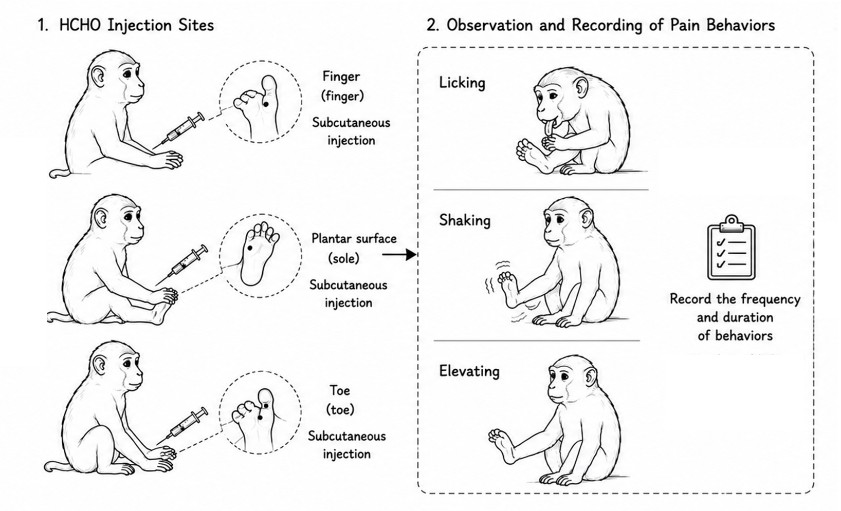
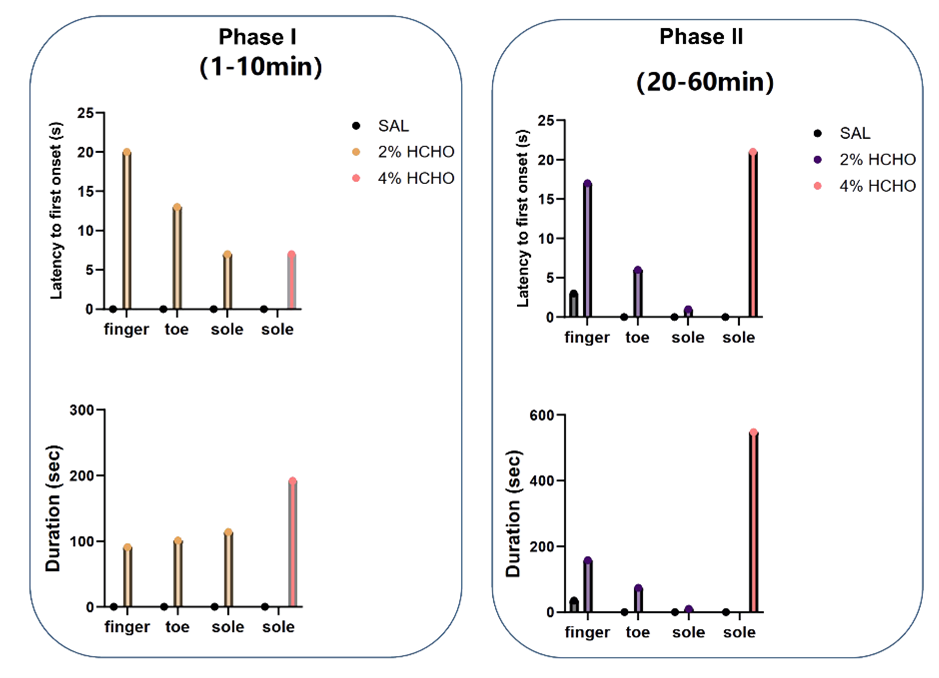
The model was successfully established in NHPs via subcutaneous injection of 2% or 4% formaldehyde (HCHO) into the finger, plantar sole, or toe. The model recapitulates the classic biphasic pain pattern of formalin pain:
Phase I (1–10 minutes): Acute nociceptive phase driven by direct chemical activation of peripheral nociceptors
Phase II (20–60 minutes): Sustained inflammatory pain phase mediated by local tissue injury and release of pro-nociceptive inflammatory mediators
Injection of 4% HCHO into the plantar sole produced the most robust and stable persistent pain response, representing the preferred regimen for evaluating long-acting anti-inflammatory and analgesic drug candidates.