
Induced proximity has emerged as a versatile therapeutic strategy extending far beyond protein degradation. By bringing proteins into spatial proximity through small molecule scaffolds, researchers can now activate, stabilize, sequester, or modulate protein complexes with precision. ICE Bioscience offers comprehensive solutions tailored to these next-generation pharmacologies.
While PROTACs and molecular glues for degradation have dominated the field, non-degradative proximity modalities—such as enzyme activation, signal rewiring, and structural stabilization—are gaining momentum. We support programs targeting both canonical and unconventional proximity mechanisms.
One of the most exciting advances in the field is the emergence of tri-complex molecular glues targeting KRAS. By inducing proximity between KRAS and non-canonical effector proteins, these molecules bypass traditional binding pockets and instead create novel interfaces for signaling control. This modality allows for therapeutic intervention in RAS-driven cancers that have resisted conventional inhibitors.
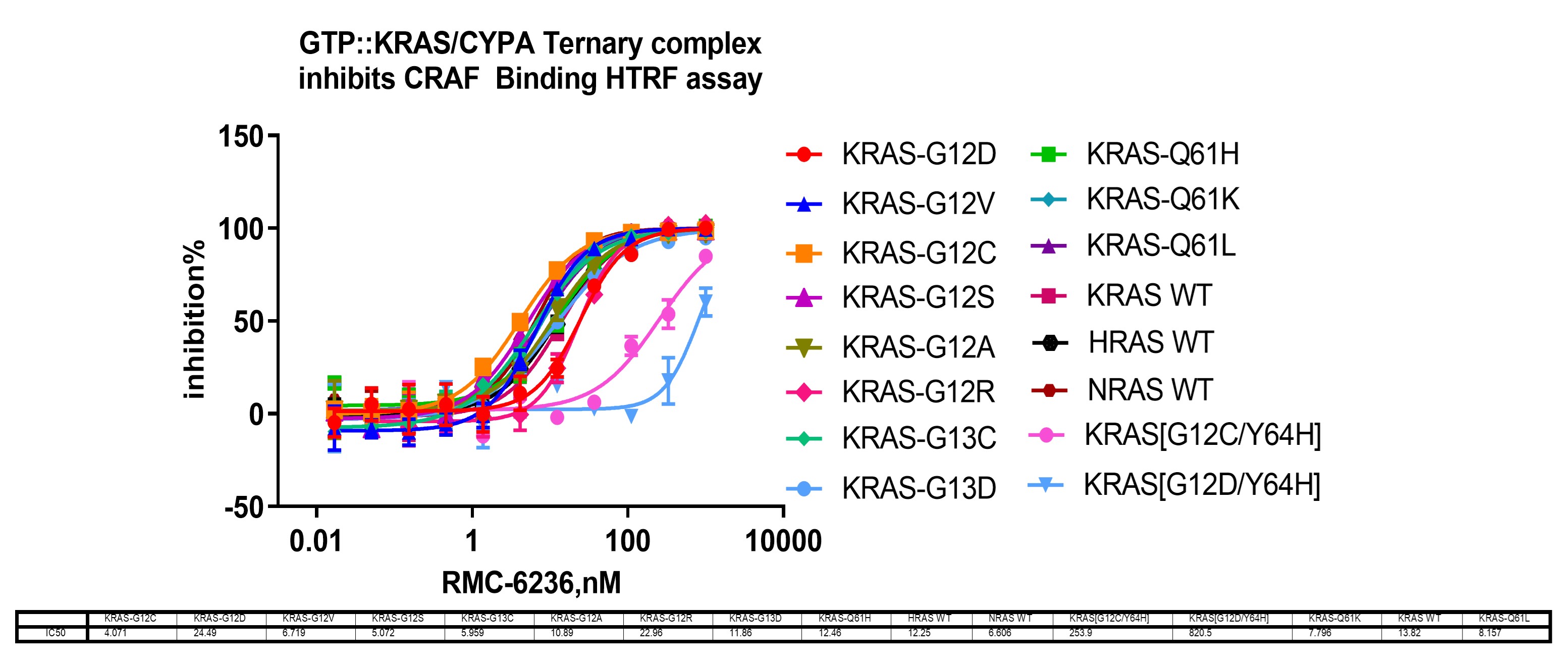
| RAS/MG/CYPA | WT | G12D | G12C | G12V | G12C/Y64H | G12D/Y64H |
|---|---|---|---|---|---|---|
| RMC-6236 | 1.49E-07 | 3.05E-07 | 3.82E-08 | 7.34E-08 | 1.94E-06 | 2.15E-04 |
| RMC-5127 | 3.40E-04 | 2.95E-06 | 1.52E-07 | 1.66E-07 | 3.60E-06 | No binding |
RIPTACs (Regulated Induced Proximity Targeting Chimeras) are bifunctional molecules that selectively kill cancer cells by inducing proximity between a tumor-specific protein and an essential cellular protein. This creates a unique tri-complex that functionally disables the essential protein—but only in cells expressing the tumor marker.
Unlike degradation-based strategies, RIPTACs rely on functional sequestration or mislocalization of the essential protein. This regulated proximity approach enables high tumor selectivity without requiring enzymatic inhibition or catalytic function.
We value your inquiries and are here to provide you with tailored solutions for your drug discovery and development needs. Whether you have questions, require more information, or are interested in discussing potential collaborations, our team of experts is just a message away.
Feel free to reach out to us.

Address: Bldg 16, Yd 18, Kechuang 13th St, Etown, Tongzhou Dist, Beijing, 100176, China
Email: marketing@ice-biosci.com
Tel:+86-10-67809840


Get a quote

Go top