Our comprehensive ADCC (Antibody-Dependent Cellular Cytotoxicity), ADCP (Antibody-Dependent Cellular Phagocytosis) and CDC (Complement-Dependent Cytotoxicity) assay services evaluate how therapeutic antibodies and other immunomodulatory agents mediate immune responses against target cells, including cancer cells and pathogens. These assays support antibody-therapy development by characterizing efficacy and mechanism of action.
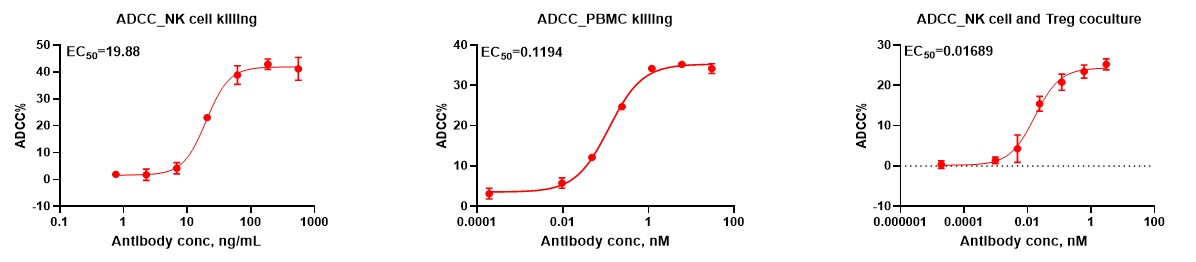
ADCC assays measure the ability of immune effector cells, particularly NK cells, to recognize and kill antibody-coated target cells. This mechanism is important for the activity of many therapeutic antibodies, especially in cancer immunotherapy.
Effector Cells: Typically uses NK cells, with optional macrophage, neutrophil or other Fc-receptor-expressing effector cells.
Target Cells: Supports tumor cell lines, virally infected cells and engineered cells expressing antigens recognized by therapeutic antibodies.
Antibody Interaction: Therapeutic or monoclonal antibodies bind antigens on target cells and trigger effector-cell activation through Fcγ receptors.
Assay Readouts: Cytotoxicity can be measured by flow cytometry, luminescence-based ATP assays or high-content imaging.
ADCP assays evaluate how effectively antibodies promote phagocytosis of target cells by macrophages and other phagocytic immune cells. This process is relevant to clearance of antibody-coated pathogens, dead cells and cancer cells.
Effector Cells: Primarily uses monocytes, macrophages and dendritic cells expressing Fcγ receptors such as FcγRIIa (CD32a), FcγRI (CD64) and FcγRIIIa (CD16a).
Phagocytic Activity: Measures the ability of effector cells to engulf and digest antibody-opsonized target cells.
Target Cells: Includes tumor cells, infected cells or particles labeled with antibodies for phagocytosis.
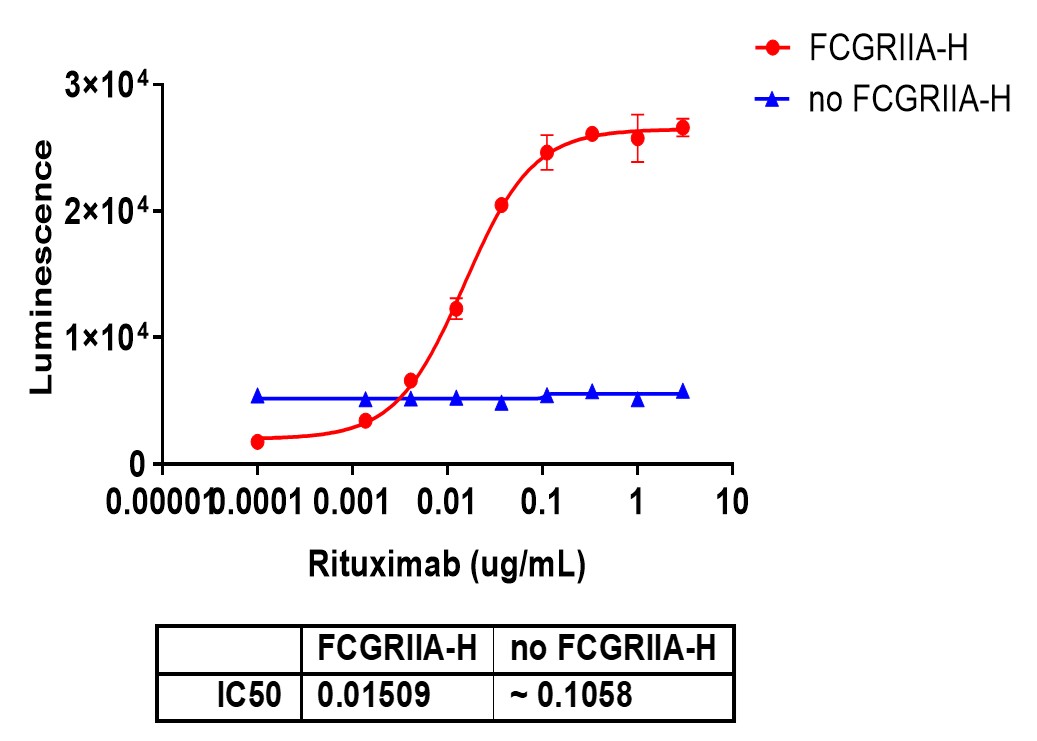
Assay Readouts: Direct readouts include flow cytometry and high-content imaging; indirect formats may measure reporter-gene activity as a proxy for Fcγ-receptor engagement and signaling.
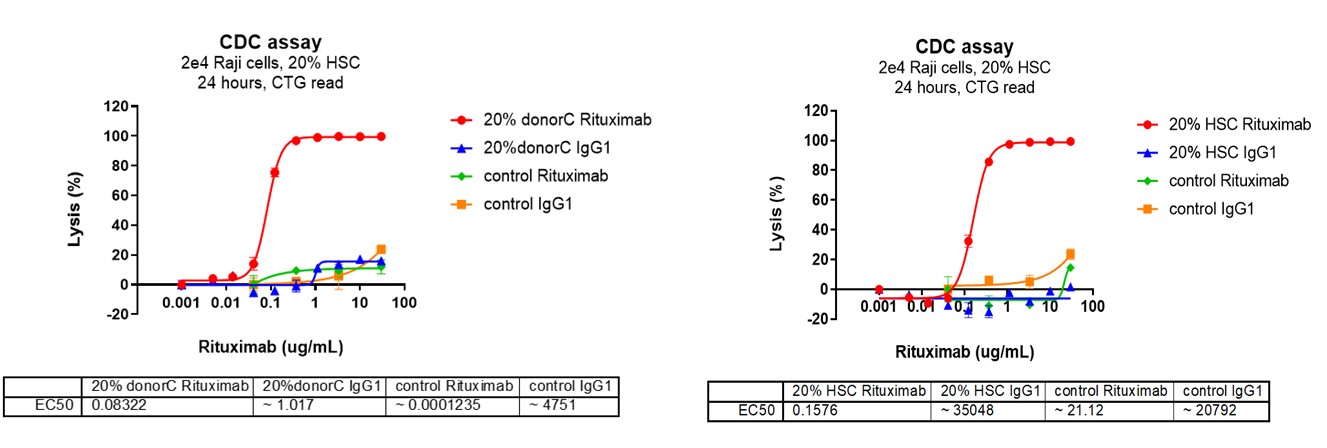
CDC assays measure the ability of antibodies to activate the complement system and induce lysis of target cells. This mechanism is relevant to the activity of therapeutic antibodies, particularly in hematological cancers.
Complement Source: Uses human serum or plasma as a source of complement proteins to initiate the complement cascade after antibody binding.
Target Cells: Supports cell lines or primary cells expressing the therapeutic-antibody target antigen, such as CD20 on B cells in lymphoma.
Membrane Attack Complex Formation: The complement cascade culminates in membrane attack complex formation, creating pores in the target-cell membrane and inducing lysis.
Assay Readouts: Cell lysis can be detected by measuring intracellular-component release such as lactate dehydrogenase, flow cytometry or luminescence-based viability assays.
We value your inquiries and are here to provide you with tailored solutions for your drug discovery and development needs. Whether you have questions, require more information, or are interested in discussing potential collaborations, our team of experts is just a message away.
Feel free to reach out to us.

Address: Bldg 16, Yd 18, Kechuang 13th St, Etown, Tongzhou Dist, Beijing, 100176, China
Email: marketing@ice-biosci.com
Tel:+86-10-67809840


Get a quote

Go top