
EN CN


Neuroscience

Return

In Vivo Models of Schizophrenia

IN VIVO SCHIZOPHRENIA MODELS

Schizophrenia is a severe, chronic neuropsychiatric disorder characterized by three distinct yet interconnected symptom clusters: positive symptoms (e.g., psychosis, locomotor hyperactivity), negative symptoms (e.g., social withdrawal, anhedonia, avolition), and cognitive impairments (e.g., working memory deficits, executive dysfunction, sensorimotor gating abnormalities). Its etiology involves multilevel neurobiological dysregulation, with four widely recognized mechanistic pillars.

Core Mechanistic Pillars

    ✅ Dopaminergic dysregulation: Excessive dopamine release in the mesolimbic pathway drives positive symptoms, while reduced dopaminergic tone in the prefrontal cortex contributes to negative and cognitive manifestations.

    ✅ Glutamate hypothesis: Impaired NMDA receptor signaling preferentially disrupts PV⁺ GABAergic interneurons, causing cortical excitation-inhibition (E/I) imbalance and cortical disinhibition, which secondarily induces cortical-subcortical dopaminergic dysfunction and bridges glutamatergic and dopaminergic disease mechanisms.

    ✅ GABAergic circuit failure: Dysfunction of PV⁺ fast-spiking interneurons disrupts gamma oscillations and precise temporal control of cortical networks, mediating deficits in sensory processing, working memory, and executive function.

    ✅ Oxidative stress and neuroinflammation: Diminished antioxidant defense, redox imbalance, and glial activation form a self-amplifying pathological cycle, causing neuronal and myelin damage that exacerbates circuit dysfunction and disease progression.

Given the constraints of clinical research in human populations, validated preclinical in vivo models are an indispensable foundation for antipsycһotic drug development. They faithfully recapitulate core pathological features and behavioral phenotypes of schizophrenia, enabling systematic, quantitative evaluation of candidate compound efficacy across symptom domains.

We have built a comprehensive in vivo schizophrenia research platform comprising acute and subchronic disease models, which recapitulate the full spectrum of positive, negative, and cognitive symptoms. Our evaluation system integrates a panel of behavioral tests — including Open Field Test (OFT), Prepulse Inhibition (PPI), Social Interaction Test (SIT) and Y-Maze test — to deliver robust, reproducible efficacy data. This platform supports rapid early-stage in vivo efficacy evaluation and candidate prioritization, as well as confirmatory efficacy assessment for antipsycһotic drug discovery programs.

MODEL SELECTION
Translational in vivo model selection for schizophrenia drug discovery
Model TypeInducerDosing RegimenPrimary SymptomAdapted R&D ScenarioBest UseKey Endpoints
Dopamine ModelAmphetamineSingle dosePositive symptomsPositive symptom screening and D2 mechanism drug validationD2/M4/TAAR1-oriented positive symptom screeningOFT
Acute Hyperactivity ModelMK-801 / PCPSingle dosePositive symptoms + acute PPI/cognitive deficitsRapid early-stage in vivo efficacy evaluation — addressing "whether the candidate compound has antipsychotic activity signal"Rapid antipsychotic activity evaluationOFT, PPI, SIT, Y-Maze, NOR
Subchronic Glutamate ModelMK-801 / PCPTwice daily × 7 daysPositive + negative + cognitive symptomsConfirmatory efficacy evaluation — addressing "whether the drug can improve negative symptoms and cognitive impairment"Confirmatory efficacy for negative symptoms, cognition, and disease-relevant circuit dysfunctionSIT, PPI, Y-Maze, NOR, OFT
VALIDATED MODEL LIBRARY
Explore the model-specific validation workflow

Select a model below to review its biological rationale, experimental design, efficacy readouts, and representative data.

Acute Schizophrenia Models

Acute schizophrenia models are induced by single-dose administration of psychotomimetic agents and are designed for rapid early-stage in vivo efficacy evaluation of candidate compounds. These models effectively recapitulate schizophrenia-like psychomotor hyperactivity, sensorimotor gating deficits, and cognitive impairments, enabling early-stage evaluation of antipsychotic activity signals.

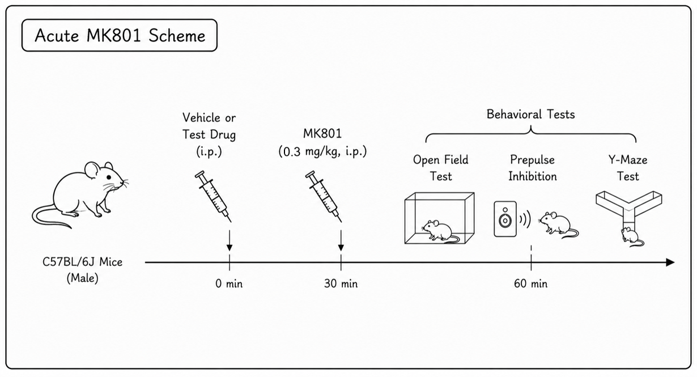
01Acute MK-801 Mouse Model

The acute MK-801 model is based on NMDA receptor (NMDAR) hypofunction, a cornerstone of the glutamate hypothesis of schizophrenia. A single dose of MK-801 induces cortical disinhibition and excitation/inhibition (E/I) imbalance, producing the positive symptoms and acute PPI/cognitive deficits characteristic of schizophrenia-like pathology.

Experimental Flow Design
Experimental flow design of acute MK-801 mouse model

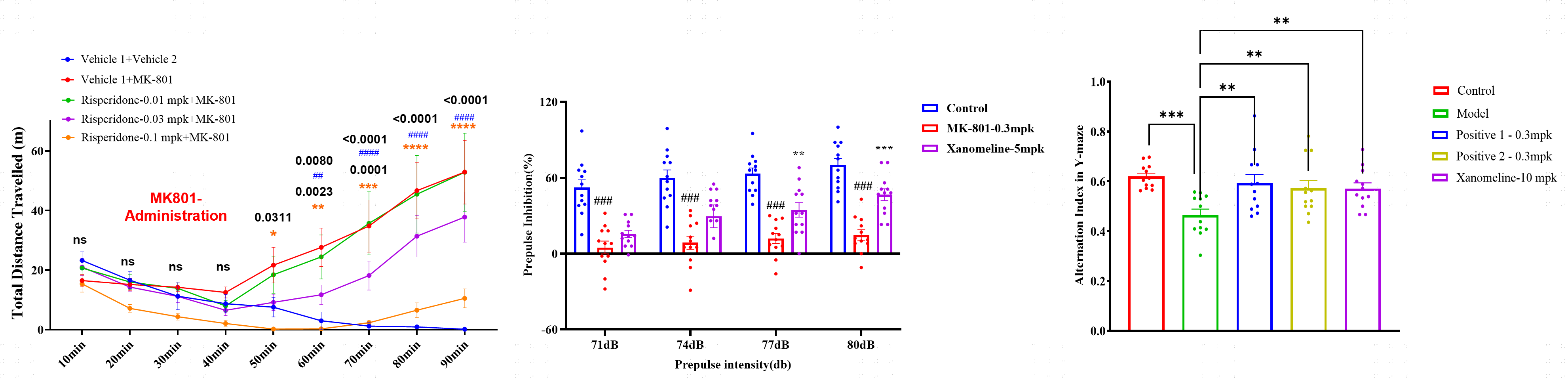
The model was evaluated across comprehensive behavioral tests including the Open Field Test (OFT), Prepulse Inhibition (PPI), and Y-Maze. The results showed pronounced psychomotor hyperactivity in the OFT, impaired sensorimotor gating in the PPI, and cognitive deficits in the Y-Maze. These abnormalities were effectively reversed by domain-specific positive control drugs, confirming the model's predictive validity across multiple symptom domains.

Acute MK-801 model validation across OFT, PPI, and Y-Maze

02Acute Amphetamine Mouse Model

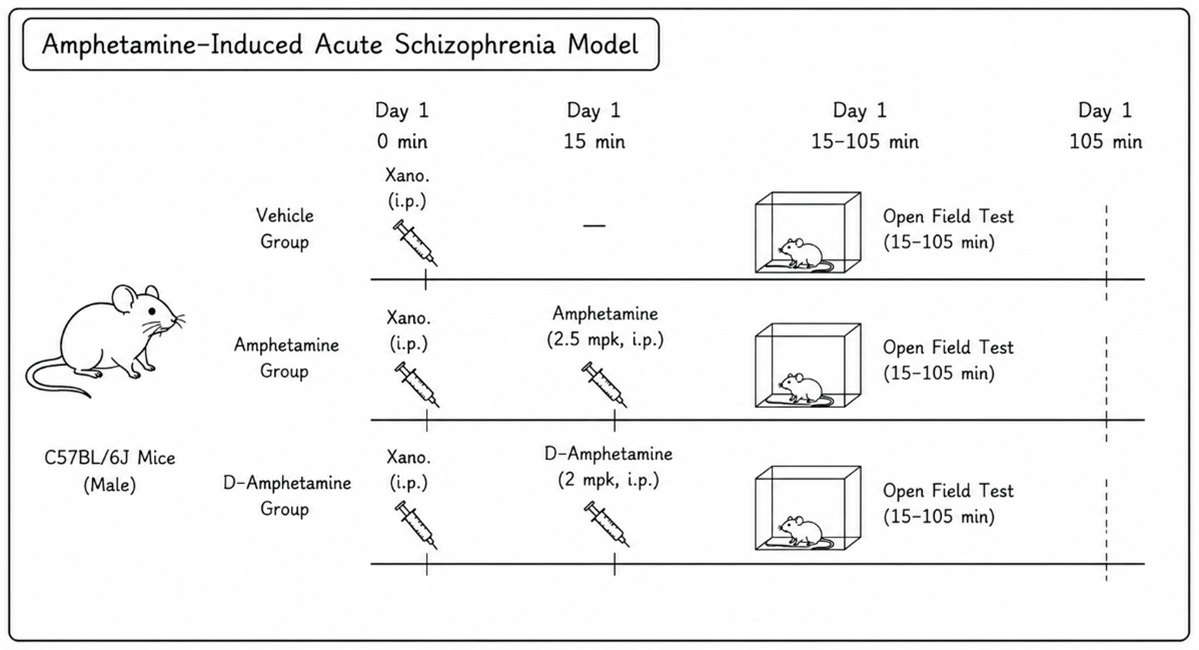
The acute amphetamine model targets the dopamine hypothesis of schizophrenia. Amphetamine/D-Amphetamine promotes dopamine release and blocks reuptake, producing a sharp increase in synaptic dopamine that mimics the positive symptoms of schizophrenia, particularly psychomotor hyperactivity.

Experimental Flow Design
Experimental flow design of acute amphetamine mouse model

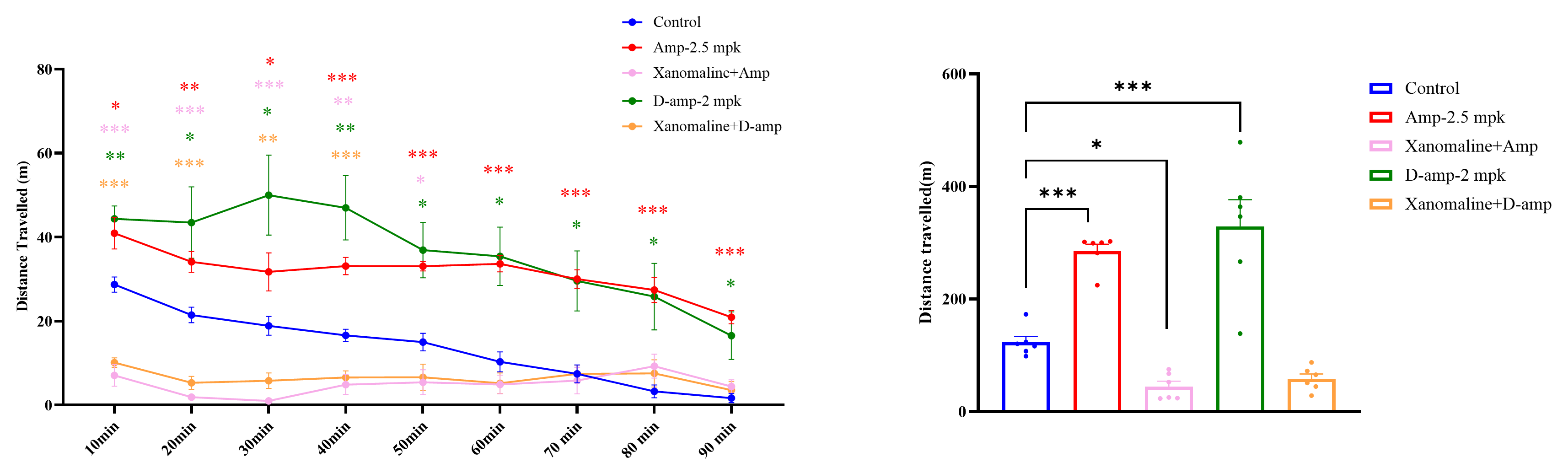
The acute amphetamine model was successfully validated using the open field test (OFT). Following amphetamine and D-amphetamine administration, mice exhibited sustained hyperactivity that persisted for 90 minutes, reflecting excessive dopaminergic signaling in the mesolimbic pathway. Treatment with Xanomeline effectively ameliorated this hyperactive phenotype, demonstrating the model's sensitivity to pharmacological intervention.

Acute amphetamine model OFT validation with Xanomeline treatment

03Acute PCP Mouse Model

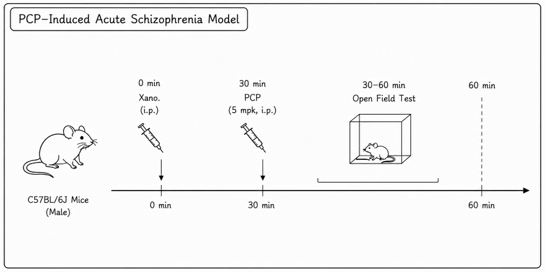
Phencyclidine (PCP) is a non-competitive NMDAR antagonist that induces acute psychotomimetic effects similar to MK-801. This model provides an additional validation platform for NMDAR hypofunction-driven positive symptoms and is particularly useful for cross-validating compound efficacy across different chemotypes of NMDAR blockers.

Experimental Flow Design
Experimental flow design of acute PCP mouse model

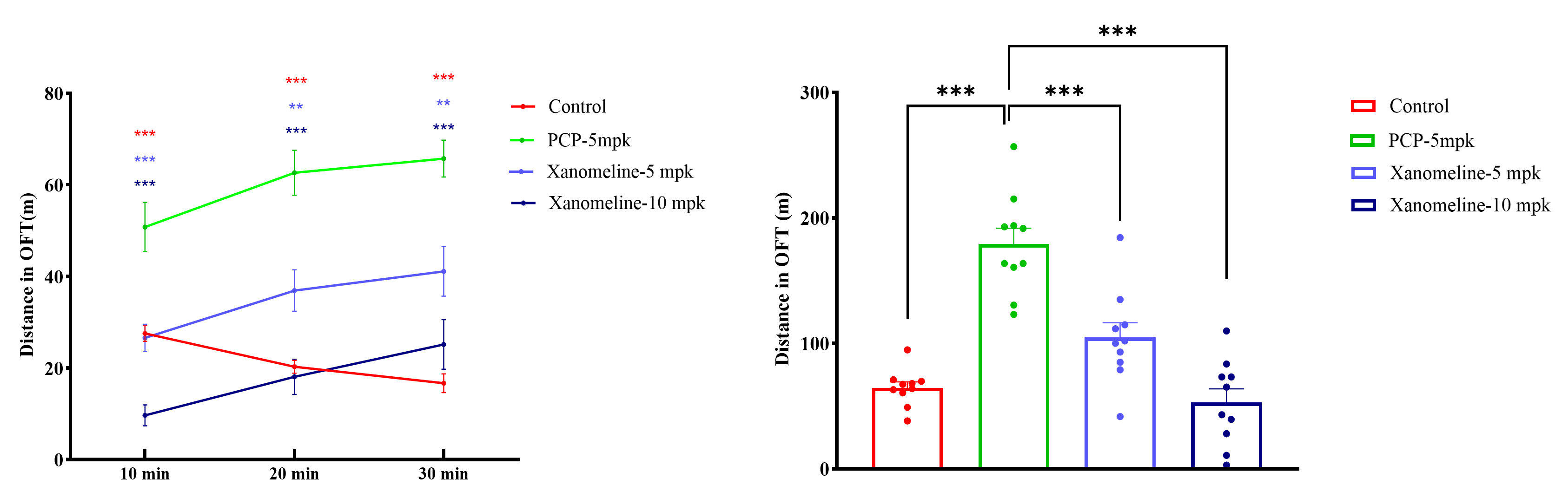
The acute PCP mouse model was successfully validated using the open field test (OFT). Following PCP administration, mice exhibited sustained hyperactivity that persisted for 30 minutes. Treatment with Xanomeline at doses of 5 and 10 mg/kg effectively ameliorated this hyperactive phenotype in a dose-dependent manner, confirming the model's pharmacological responsiveness and dose–response characteristics.

Acute PCP model OFT validation with Xanomeline dose-response

Chronic Schizophrenia Model

Chronic schizophrenia models employ repeated administration of psychotomimetic agents followed by a washout period to induce stable, long-lasting behavioral phenotypes. These models are particularly valuable for confirmatory efficacy evaluation of negative symptoms and cognitive impairments—domains that remain poorly addressed by current antipsychotic therapies.

01Chronic PCP Mouse Model

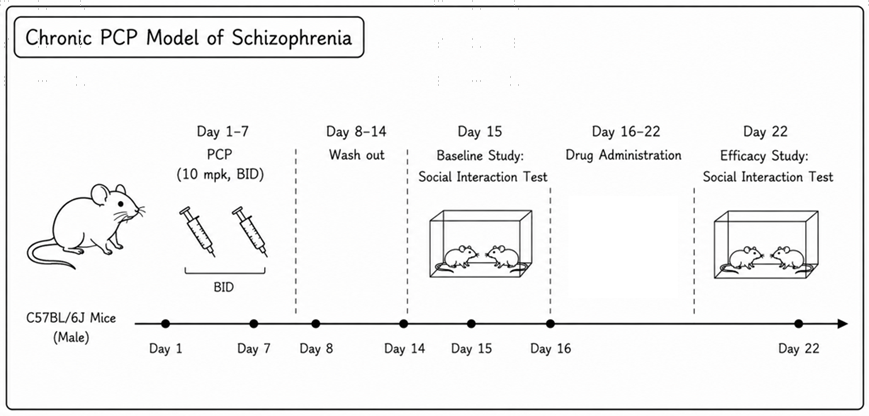
The chronic PCP model is established through 1 week of repeated PCP administration, followed by a 1-week washout period. This subchronic regimen induces persistent neural circuit adaptations, including stable secondary cortical–subcortical dopaminergic dysregulation and sustained negative symptom phenotypes that persist beyond drug clearance.

Experimental Flow Design
Experimental flow design of chronic PCP mouse model
Baseline Study & Grouping (Post-Washout)

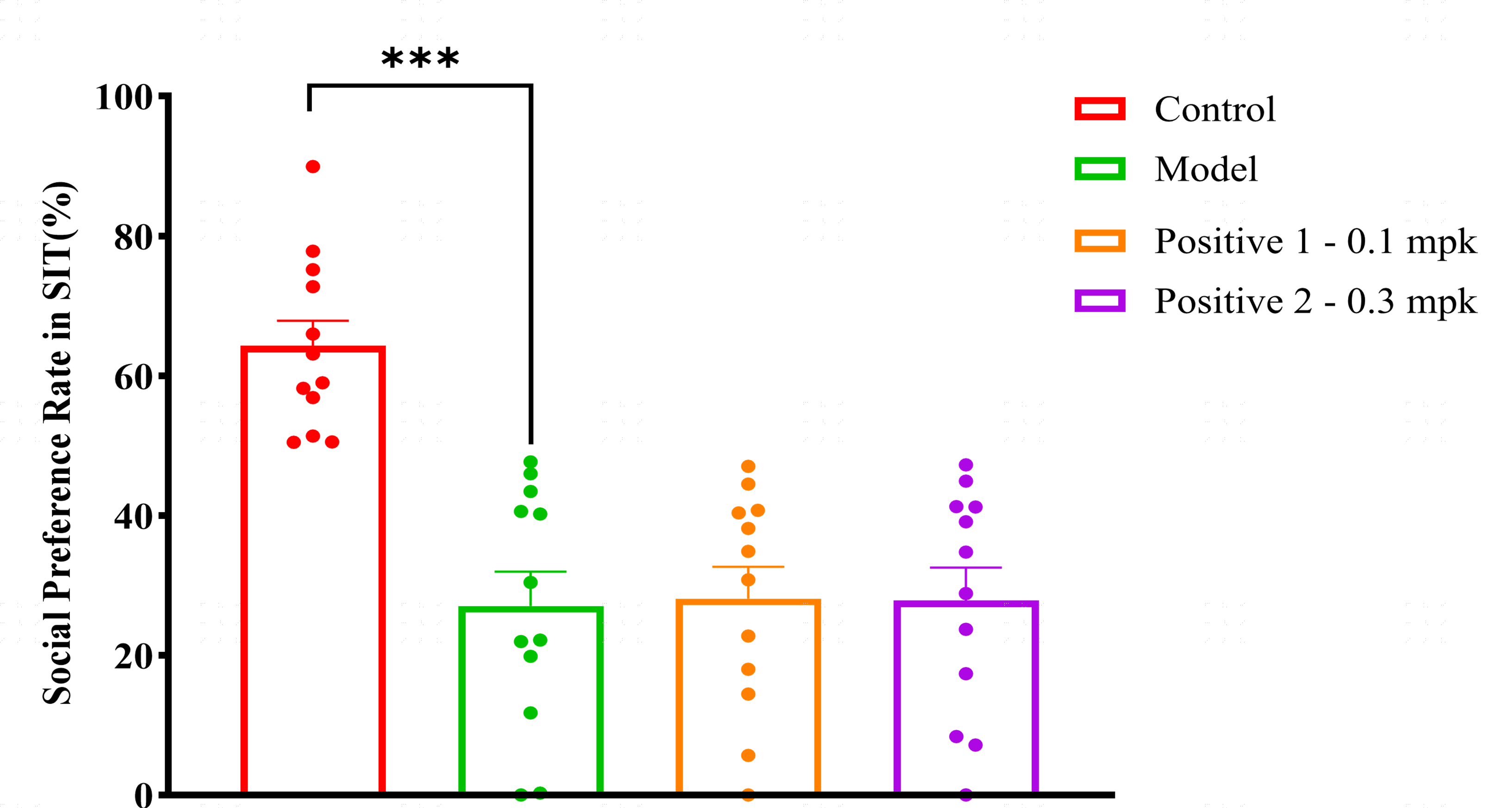
Following the 1-week washout period, baseline behavioral testing confirmed the successful and stable induction of PCP-induced social interaction deficits. Animals were then assigned to balanced, unbiased treatment groups based on baseline performance.

Baseline social interaction deficits and group stratification post-washout

Behavioral Efficacy (Post-Treatment)

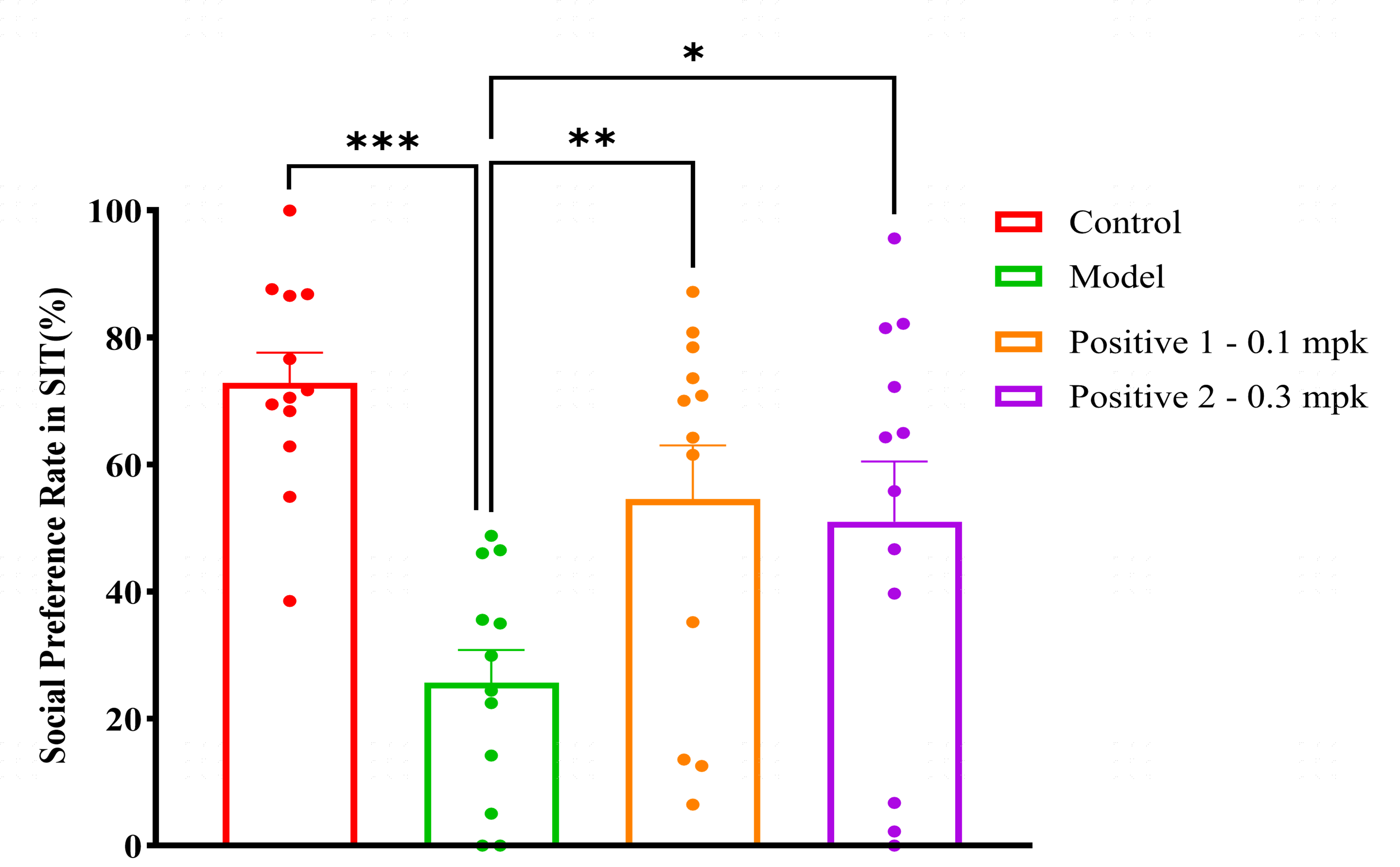
After 1 week of drug administration, behavioral testing demonstrated that the experimental compound successfully reversed the PCP-induced decrease in social interaction, restoring social behavior to near-normal levels.

Post-treatment behavioral efficacy showing reversal of social interaction deficits


Contact Us

We value your inquiries and are here to provide you with tailored solutions for your drug discovery and development needs. Whether you have questions, require more information, or are interested in discussing potential collaborations, our team of experts is just a message away.
Feel free to reach out to us.

We are a CRO service organization, not a hospital


Get a quote

Go top