Language / 语言


Neuroscience

Return

In Vivo Pain Models & Pharmacology Services

In Vivo Pain Models
IN VIVO PAIN MODELS

Pain is a complex and multidimensional condition involving peripheral nociceptor activation, neuroinflammation, central sensitization, neuronal hyperexcitability, and maladaptive neural plasticity. Different pain etiologies can therefore exhibit distinct behavioral phenotypes and underlying mechanisms, making model selection critical for preclinical analgesic research.

We provide a portfolio of validated in vivo pain models designed to recapitulate diverse pain mechanisms and disease-relevant phenotypes, supporting efficacy evaluation and mechanism-oriented drug discovery across multiple pain indications. Our in vivo pain model portfolio covers neuropathic, inflammatory, visceral, cancer-related, chemotherapy-induced, postoperative, and migraine-like pain, with models established in mice, rats, and, where applicable, Beagle dogs.

Behavioral pharmacology is integrated with model validation to characterize pain-related phenotypes and assess pharmacological responses. Depending on the model, endpoints include mechanical paw withdrawal threshold (PWT), thermal paw withdrawal latency (PWL), cold allodynia, facial/periorbital mechanical sensitivity, nocifensive behaviors, abdominal responses, spontaneous pain-related behaviors, and gait abnormalities. Together, these models provide a flexible platform for analgesic efficacy testing, model-specific mechanism studies, and translational pain drug discovery.

MODEL SELECTION
Translational in vivo model selection for pain drug discovery
Pain CategoryModelCore MechanismKey Endpoints / BiomarkersModel Robustness and ChallengesIndication Relevance (Common Positive Controls)


Neuropathic Pain

SNL (Spinal Nerve Ligation)Central sensitization, microglial activation, and NMDAR upregulation lead to hyperexcitability of spinal neurons.Behavioral: Reduced mechanical paw withdrawal threshold (PWT) and thermal paw withdrawal latency (PWL). Molecular: Spinal dorsal horn: Iba-1↑, NMDAR1↑.Robustness: High after procedural standardization. Challenge: Technically demanding surgery; ligation tightness affects inter-animal variability.Indications: Lumbar disc herniation; sciatica. Positive controls: Gabapentin; pregabalin.
CCI (Chronic Constriction Injury)Peripheral and central neuroinflammation. Local nerve constriction induces neuroinflammation and demyelination, activates spinal TLR4/NF-κB signaling, and promotes pro-inflammatory cytokine release.Behavioral: Mechanical and thermal hyperalgesia/allodynia. Molecular: Ipsilateral sciatic nerve: demyelination, ATF-3↑. Spinal dorsal horn: TLR4/NF-κB↑, TNF-α/IL-6↑.Robustness: Widely used and technically mature. Challenge: Ligature tightness is critical and operator-dependent.Indications: Chronic nerve entrapment; lumbar disc herniation. Positive controls: Gabapentin; amitriptyline.
SNI (Spared Nerve Injury)Peripheral sensitization and central plasticity. Selective nerve injury induces ectopic firing in DRG neurons and persistent spinal glial activation.Behavioral: Marked mechanical and cold allodynia, with minimal thermal hyperalgesia. Molecular: DRG and spinal dorsal horn: microglial and astrocytic activation.Robustness: Relatively simple procedure, stable phenotype, and high reproducibility. Challenge: Requires precise identification of nerve branches; not suitable for thermal-pain studies.Indications: Long-term efficacy evaluation and mechanistic studies. Positive controls: Lidocaine patch; pregabalin.
DPN (Diabetic Peripheral Neuropathy)Metabolic dysregulation and oxidative stress. Hyperglycemia induces polyol-pathway activation, AGE accumulation, oxidative stress, and microvascular injury.Behavioral: Mechanical and thermal hypersensitivity. Molecular: Sciatic nerve or spinal cord: increased oxidative-stress markers and inflammatory cytokines.Robustness: Dependent on the induction method, with generally reliable model establishment. Challenge: Multiple model subtypes; systemic effects of hyperglycemia may confound interpretation.Indication: Diabetic peripheral neuropathy. Positive controls: Mecobalamin; α-lipoic acid; epalrestat.
TN (Trigeminal Neuralgia)Compression or injury of the trigeminal nerve root/ganglion induces ectopic discharge, central sensitization, and neuroinflammation.Behavioral: Reduced ipsilateral facial mechanical threshold (von Frey). Molecular: Trigeminal ganglion and brainstem (spinal trigeminal nucleus): altered inflammatory markers.Robustness: Vascular-compression models require advanced technical expertise. Challenge: Complex craniofacial surgery; behavioral readouts may be confounded by tactile sensory impairment.Indication: Trigeminal neuralgia. Positive controls: Carbamazepine; oxcarbazepine; gabapentin.
MigraineNitroglycerin-Induced Migraine-Like PainNO donors activate the trigeminovascular system and promote CGRP release, leading to sterile neurogenic inflammation.Behavioral: Reduced periorbital mechanical threshold. Molecular: Trigeminal ganglion or plasma: CGRP↑.Robustness: Cost-effective, convenient, and reproducible. Challenge: Behavioral endpoints have limited specificity; primarily an acute model.Indication: Acute migraine attacks. Positive controls: Triptans (e.g., sumatriptan); CGRP receptor antagonists.
Inflammatory PainFormalin TestPhase I: Direct chemical activation of C-fibers. Phase II: Release of inflammatory mediators, resulting in central sensitization.Behavioral: Number and duration of paw licking/flinching within 60 min. Molecular: Spinal dorsal horn: c-Fos↑ and inflammatory mediators↑.Robustness: Simple procedure and stable phenotype. Challenge: Behavioral scoring can be subjective; adequate habituation is required.Indications: Acute inflammatory pain; postoperative pain. Positive controls: NSAIDs (e.g., ibuprofen); morphine.
CFA (Complete Freund's Adjuvant)Chronic inflammation and immune activation. CFA induces a Th1-dominant response, pro-inflammatory cytokine release, and activation of Src/TLR4 signaling.Behavioral: Persistent mechanical and thermal hypersensitivity. Molecular: Local paw tissue and spinal dorsal horn: TLR4/NF-κB↑; IL-1β/IL-6/TNF-α↑.Robustness: Widely used, long-lasting, and stable model. Challenge: Requires precise intradermal injection; secondary infection may occur.Indications: Rheumatoid arthritis; chronic inflammatory joint pain. Positive controls: Methotrexate; TNF-α inhibitors; NSAIDs.
Visceral PainFormalin-Induced ColitisChemical injury to the colonic mucosa induces local inflammation and visceral hypersensitivity.Behavioral: Abdominal contraction (F), stretching (B), and related pain scores. Molecular: Colon tissue: increased inflammatory cytokines and mucosal injury.Robustness: Well-established model. Challenge: Requires anesthesia and rectal administration; behavioral observation is labor-intensive.Indications: Ulcerative colitis; irritable bowel syndrome. Positive controls: 5-aminosalicylic acid; olsalazine.
Cancer PainBone Cancer Pain (BCP)Excessive osteoclast activation causes bone destruction. Tumor cells release inflammatory mediators, including TGF-β, PGE2, and NGF; aberrant sensory-nerve sprouting and invasion into the bone marrow cavity also contribute to pain.Behavioral: Mechanical/thermal hypersensitivity and spontaneous pain, including gait abnormalities and hind-limb lifting. Molecular: Tibial/femoral bone marrow: TRAP↑ and RANKL/OPG imbalance. DRG: ATF-3↑ and Naᵥ1.8↑. Spinal dorsal horn: p-ERK↑ and c-Fos↑.Robustness: Tumor-cell viability is critical; tumor establishment is generally high. Challenge: Requires an SPF environment; substantial inter-animal variability in tumor growth. Bone destruction should be considered rather than interpreting the phenotype as inflammatory pain alone.Indications: Bone-metastatic pain from breast or prostate cancer. Positive controls: Bisphosphonates (e.g., zoledronic acid); denosumab; opioids (e.g., morphine); radiotherapy.
Chemotherapy-Induced PainVincristine/Paclitaxel-Induced PainDrugs accumulate in the DRG, causing mitochondrial dysfunction, oxidative stress, and ion-channel alterations.Behavioral: Mechanical hypersensitivity and cold allodynia. Molecular: DRG: mitochondrial dysfunction and altered α7 nicotinic acetylcholine receptor (α7nAChR) signaling.Robustness: Dependent on the dosing regimen. Challenge: Systemic toxicity can confound results; pain phenotypes vary substantially between chemotherapeutic agents.Indication: Chemotherapy-induced peripheral neuropathy (CIPN). Positive controls: Duloxetine; gabapentin; vitamin B complex.
Postoperative PainPlantar Incision (PSP)Predominantly peripheral sensitization. Incision-induced tissue injury and inflammatory-mediator release activate peripheral nociceptors, accompanied by transient spinal central sensitization.Behavioral: Mechanical hypersensitivity (PWT↓). Molecular: Incisional skin/fascia: IL-6, COX-2, PGE2, and NGF↑. Spinal dorsal horn: p-ERK↑, c-Fos↑, and transient glial activation.Robustness: Very simple procedure, with a near-100% model induction rate. Challenge: The phenotype is self-limiting and unsuitable for long-term chronic-pain studies; incision depth must be tightly controlled to avoid damage to muscle or bone.Indications: Acute postsurgical pain; pain during incision healing. Positive controls: NSAIDs (e.g., ibuprofen and parecoxib); local-anesthetic wound infiltration; opioids.
VALIDATED MODEL LIBRARY
Explore the model-specific validation workflow

Select a model below to review its biological rationale, experimental design, efficacy readouts, and representative data.

01Chronic Constriction Injury (CCI) Rat Model

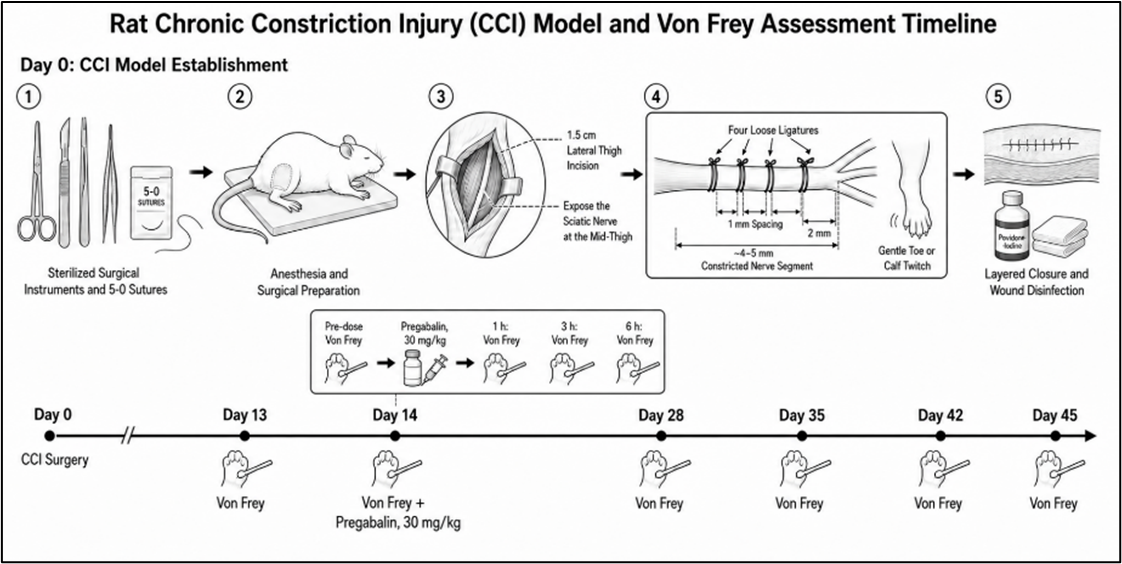
The chronic constriction injury (CCI) rat model is a well-established peripheral neuropathic pain model. CCI surgery induces peripheral nerve injury and neuroinflammatory responses, resulting in persistent mechanical allodynia. Following model establishment, pregabalin is administered at 30 mg/kg, followed by behavioral assessment of mechanical paw withdrawal threshold (PWT) with von Frey filaments to evaluate analgesic efficacy.

Experimental flow design

Experimental Flow Design of CCI Rat Model

Behavioral characterization

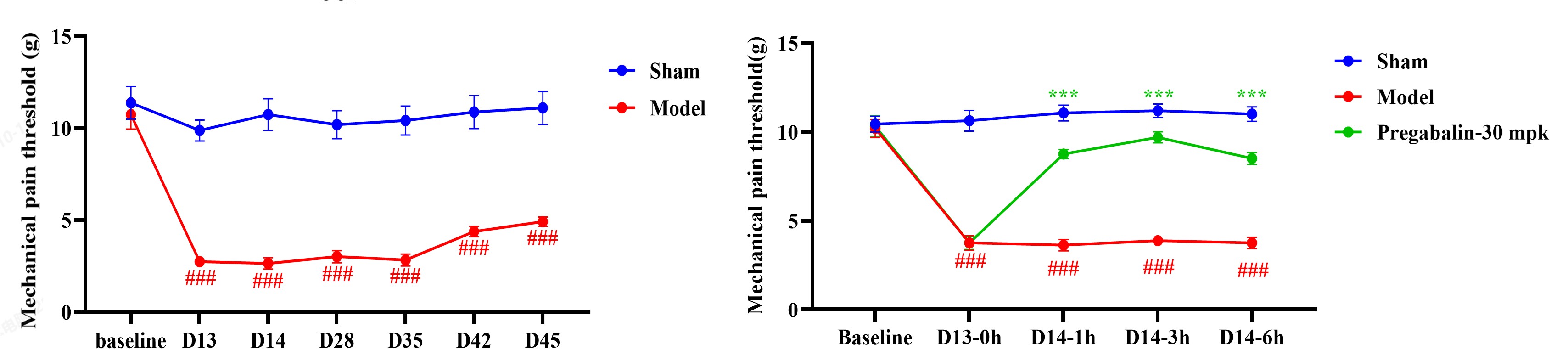
CCI surgery induced stable mechanical allodynia from Day 13 through Day 45. After model verification on Day 13, pregabalin (30 mg/kg) administered on Day 14 significantly increased the mechanical paw withdrawal threshold during the 6-hour post-dose period, confirming the model's pharmacological responsiveness.

Behavioral characterization of the CCI rat model

02Spinal Nerve Ligation (SNL) Mouse Model

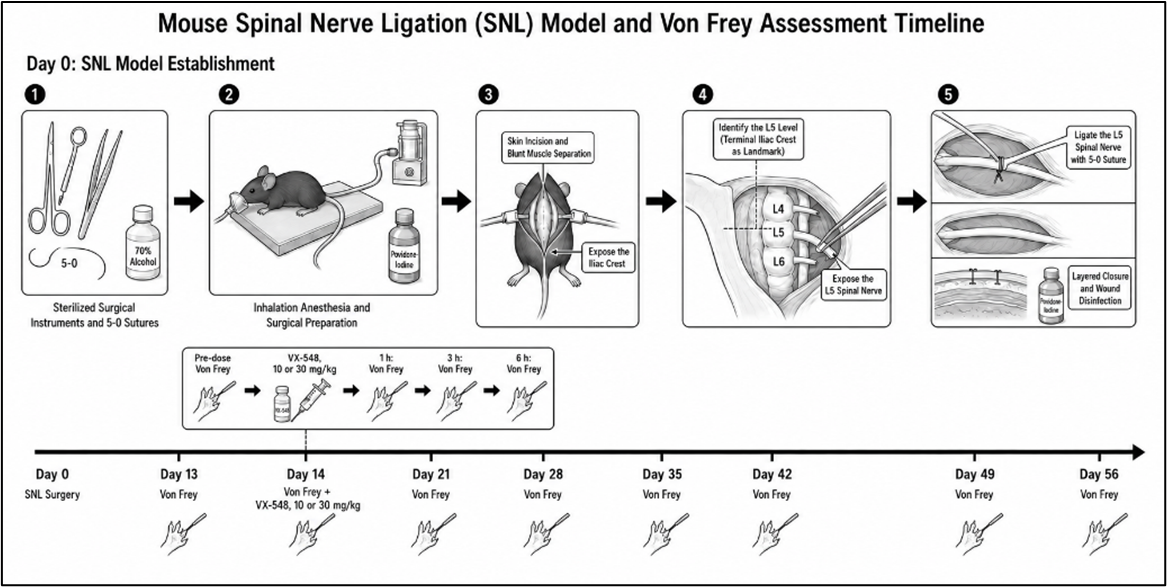
The spinal nerve ligation (SNL) mouse model is an established model of neuropathic pain. SNL surgery induces nerve injury-associated sensitization, resulting in persistent mechanical allodynia. Following model establishment, VX-548 is administered at 10 and 30 mg/kg, followed by behavioral assessment of mechanical paw withdrawal threshold (PWT) with von Frey filaments to evaluate pharmacological efficacy.

Experimental flow design

Experimental Flow Design of SNL Mouse Model

Behavioral characterization

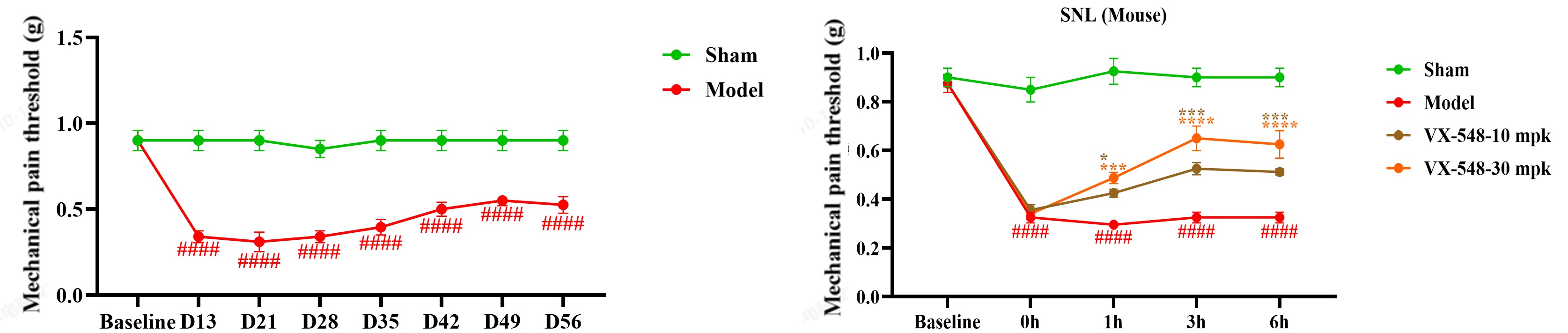
Mouse SNL surgery induced stable mechanical allodynia from Day 13 through Day 56. Following model verification on Day 13, VX-548 (10 and 30 mg/kg) administered on Day 14 increased the mechanical paw withdrawal threshold during the 6-hour post-dose period, confirming sustained model stability and pharmacological responsiveness.

Behavioral characterization of the SNL mouse model

03Spinal Nerve Ligation (SNL) Rat Model

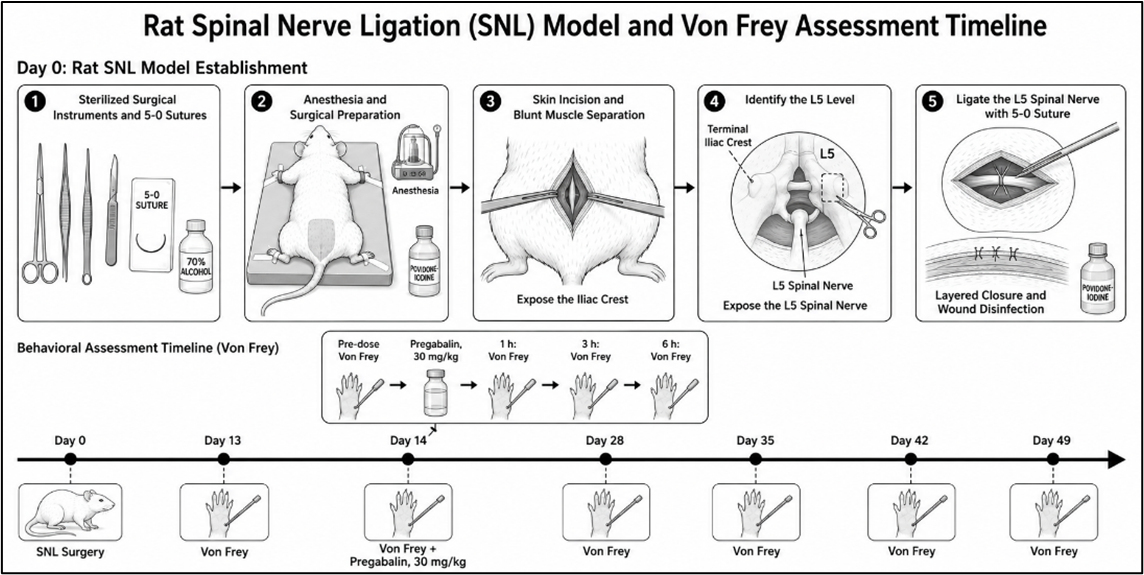
The spinal nerve ligation (SNL) rat model is an established neuropathic pain model characterized by persistent mechanical hypersensitivity following nerve injury. Following SNL model establishment, pregabalin is administered at 30 mg/kg, followed by behavioral assessment of mechanical paw withdrawal threshold (PWT) with von Frey filaments to evaluate analgesic efficacy.

Experimental flow design

Experimental Flow Design of SNL Rat Model

Behavioral characterization

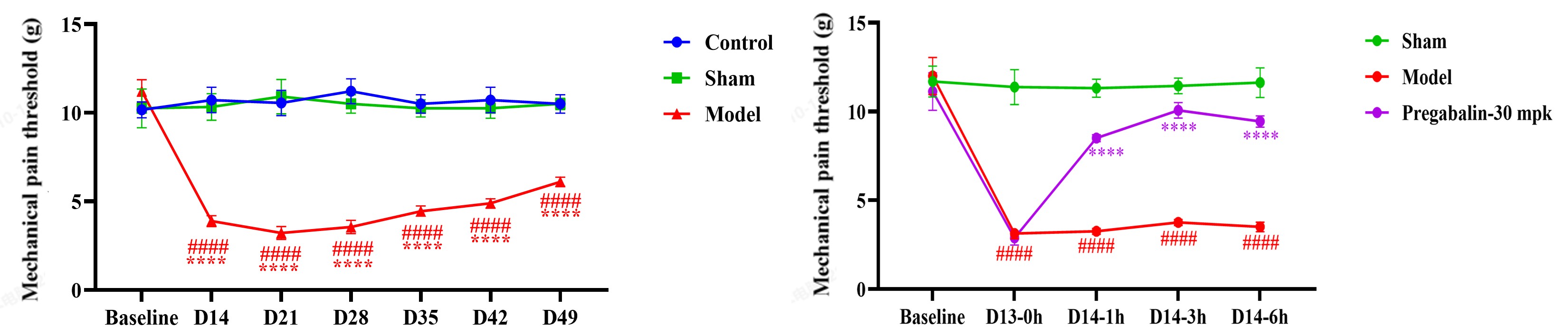
Rat SNL surgery induced stable mechanical allodynia from Day 13 through Day 49. Following model verification on Day 13, pregabalin treatment significantly increased the mechanical paw withdrawal threshold for up to 6 hours on Day 14, confirming sustained model stability and pharmacological responsiveness.

Behavioral characterization of the SNL rat model

04Diabetic Peripheral Neuropathy (DPN) Rat Model

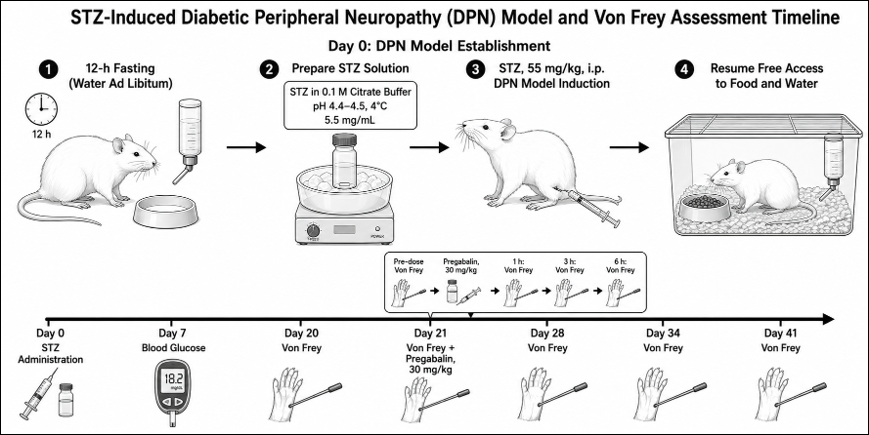
The streptozocin (STZ)-induced rat diabetic peripheral neuropathy (DPN) model is an established model of metabolic neuropathic pain. STZ induction produces diabetes-associated peripheral nerve dysfunction, resulting in persistent mechanical hypersensitivity. Following model establishment, pregabalin is administered at 30 mg/kg, followed by behavioral assessment of mechanical paw withdrawal threshold (PWT) with von Frey filaments to evaluate analgesic efficacy.

Experimental flow design

Experimental Flow Design of DPN Rat Model

Behavioral characterization

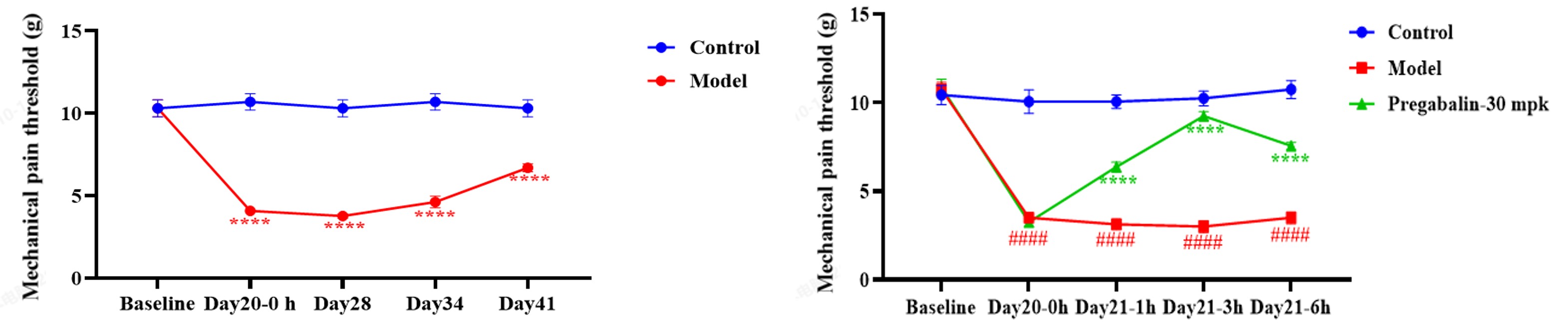
STZ-induced rat DPN produced stable mechanical allodynia from Day 20 through Day 41. Following model verification on Day 20, pregabalin (30 mg/kg) administered on Day 21 significantly increased the mechanical paw withdrawal threshold for up to 6 hours, confirming model stability and pharmacological responsiveness.

Behavioral characterization of the DPN rat model

05Formalin-Induced Inflammatory Pain Mouse Model

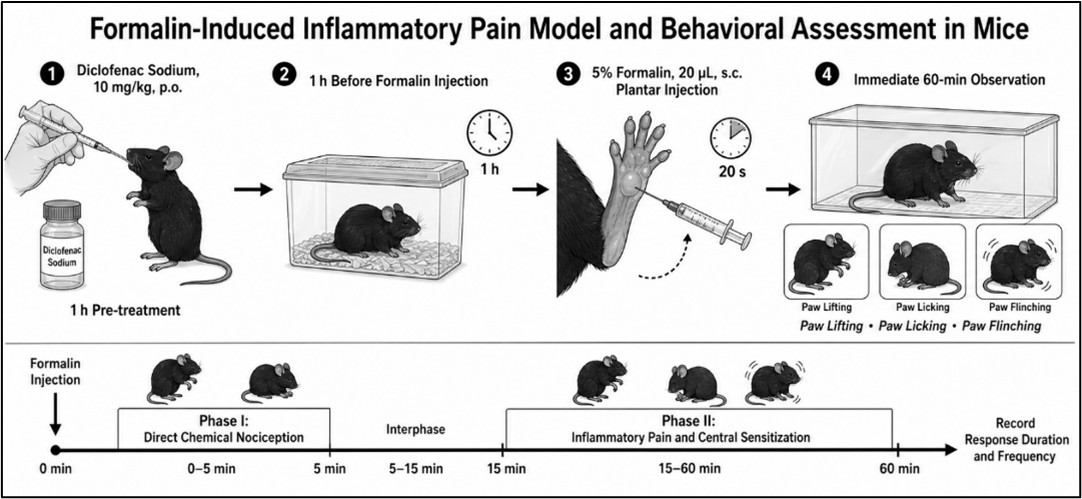
The formalin-induced inflammatory pain model is an established acute pain model characterized by a biphasic nocifensive response. Formalin injection induces an early direct nociceptive response followed by a prolonged inflammatory and central sensitization phase. Following model establishment, diclofenac sodium is administered at 10 mg/kg, followed by behavioral assessment of paw licking and flinching during the 60-minute observation period.

Experimental flow design

Experimental Flow Design of Formalin-Induced Inflammatory Mouse Model

Behavioral characterization

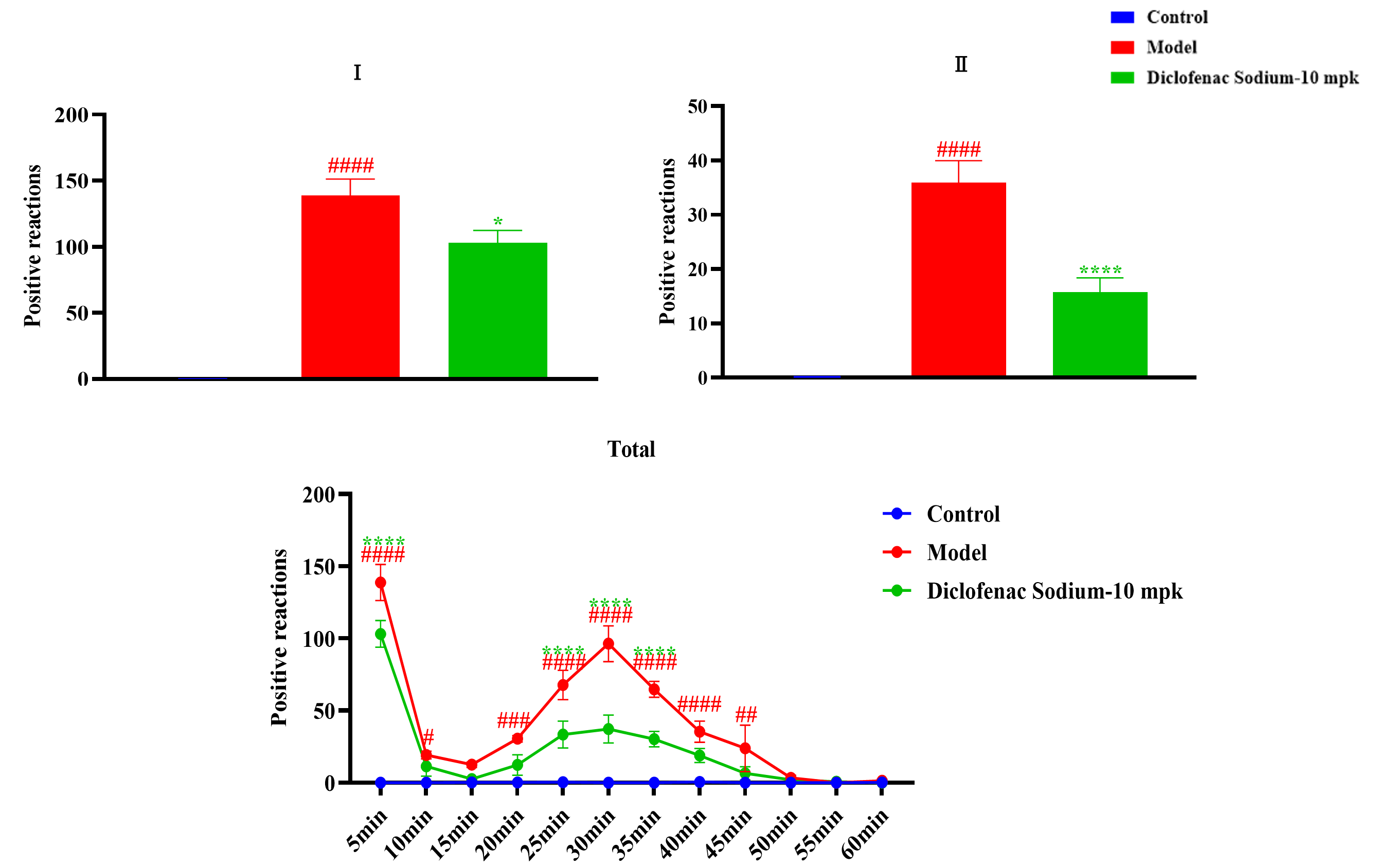
Formalin injection induced robust biphasic nocifensive responses during Phase I, Phase II, and the total 60-minute observation period. Diclofenac sodium (10 mg/kg) significantly reduced these pain-related responses, confirming the model's pharmacological sensitivity.

Behavioral characterization of the formalin-induced inflammatory pain mouse model

06Infraorbital Nerve Ligation Mice Model

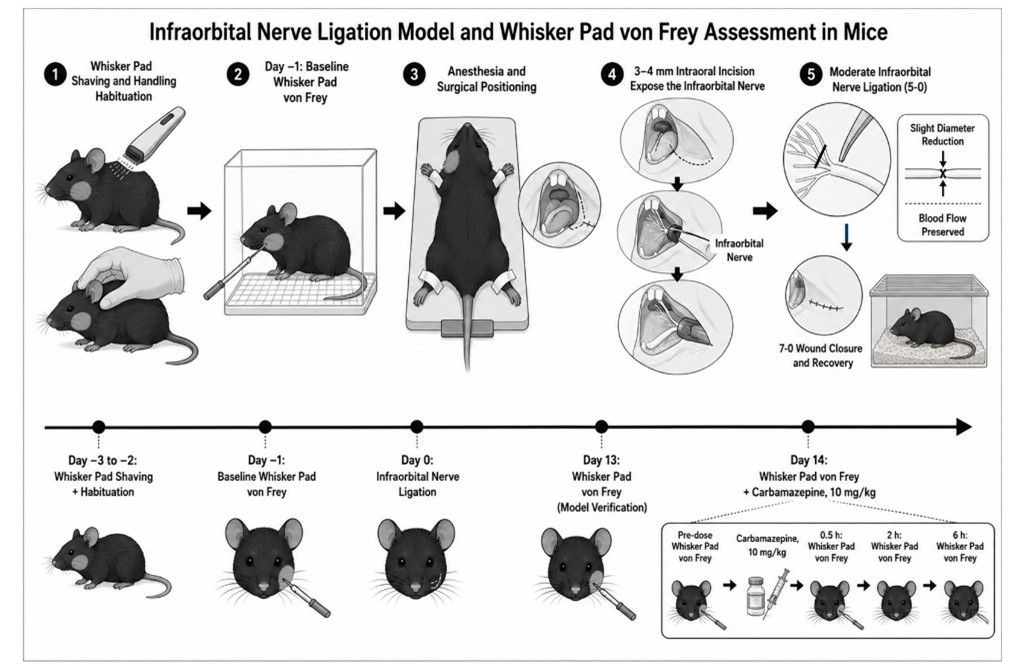
The infraorbital nerve ligation mouse model is an established model of trigeminal neuropathic pain. Infraorbital nerve ligation induces persistent trigeminal sensory hypersensitivity, resulting in mechanical allodynia in the whisker-pad region. Following model establishment, carbamazepine is administered at 10 mg/kg, followed by behavioral assessment of whisker-pad mechanical withdrawal threshold with von Frey filaments to evaluate analgesic efficacy.

Experimental flow design

Experimental Flow Design of Infraorbital Nerve Ligation Mouse Model

Behavioral characterization

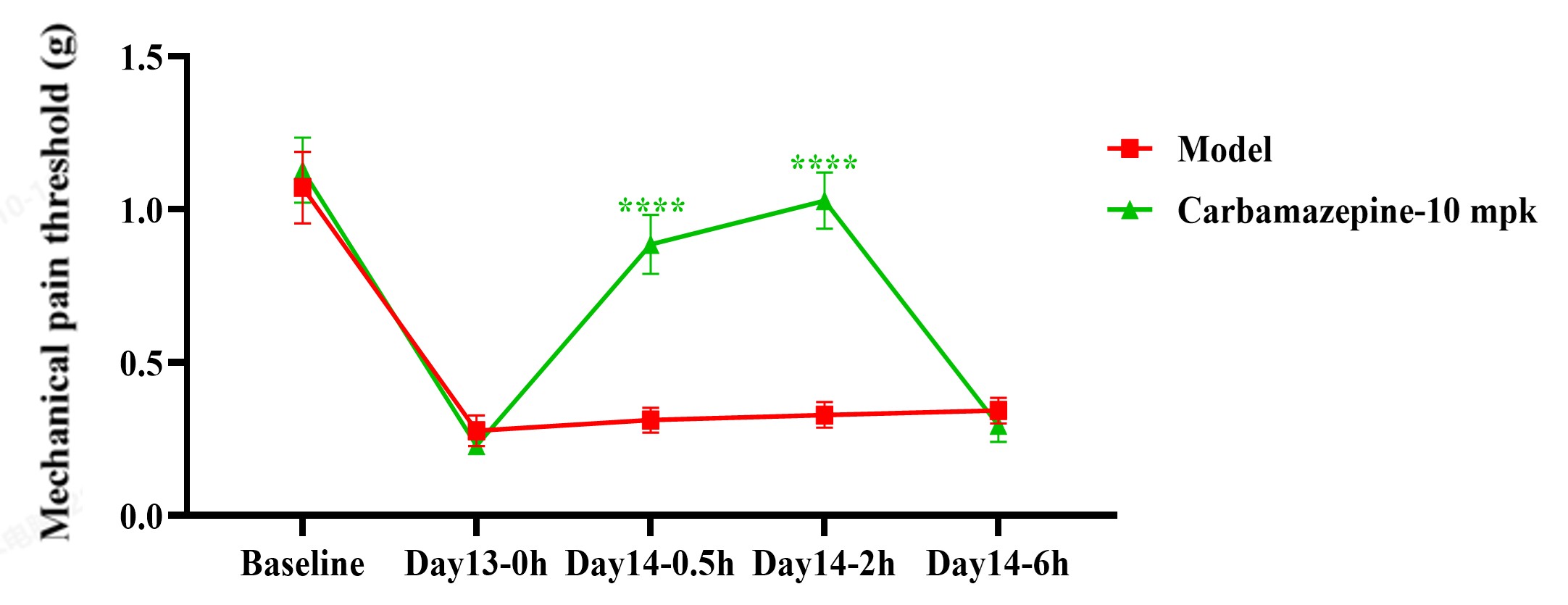
Infraorbital nerve ligation induced robust whisker-pad mechanical allodynia by Day 13. On Day 14, carbamazepine (10 mg/kg) significantly increased the mechanical withdrawal threshold from 0.5 to 2 hours after dosing, whereas the analgesic effect was no longer evident at 6 hours, indicating a transient pharmacodynamic response.

Behavioral characterization of the infraorbital nerve ligation mouse model

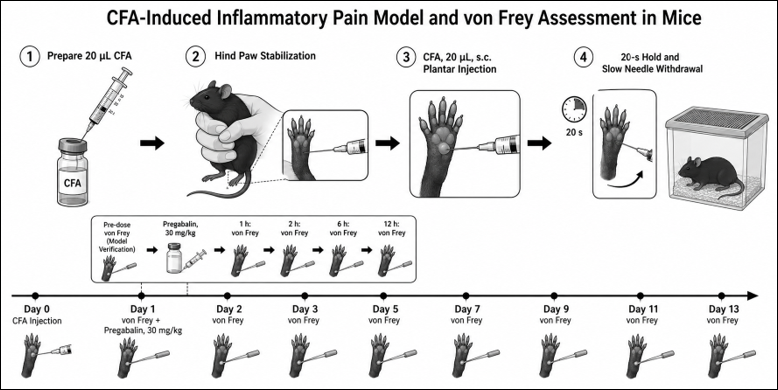
07CFA-Induced Inflammatory Pain Mouse Model

The complete Freund's adjuvant (CFA)-induced inflammatory pain model is an established model of persistent inflammatory pain. Intradermal CFA administration induces sustained local inflammation and peripheral sensitization, resulting in persistent mechanical hypersensitivity. Following model establishment, pregabalin is administered at 30 mg/kg, followed by behavioral assessment of mechanical paw withdrawal threshold (PWT) with von Frey filaments to evaluate analgesic efficacy.

Experimental flow design

Experimental Flow Design of CFA-Induced Inflammatory Mouse Model

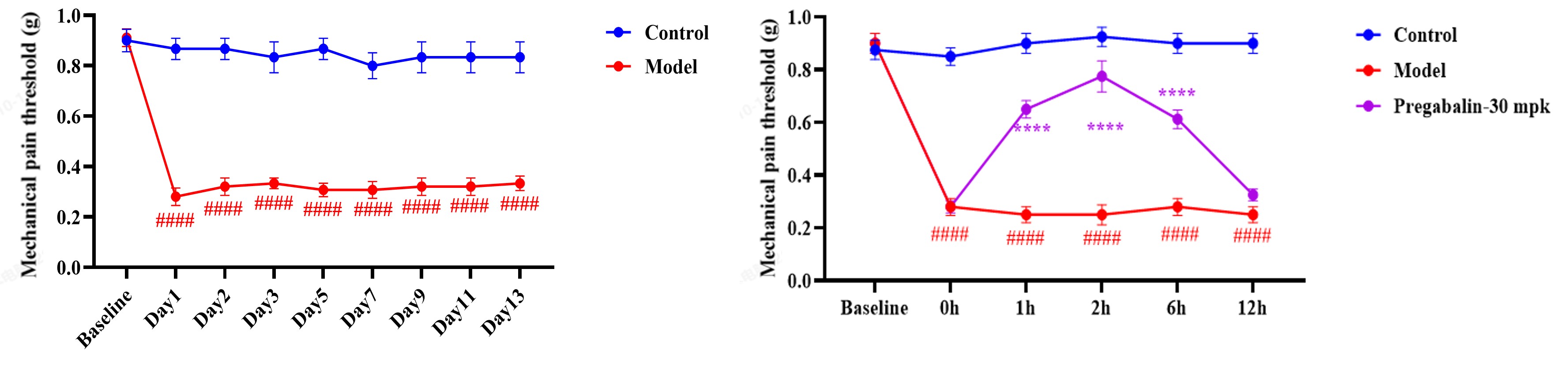
Behavioral characterization

CFA injection induced persistent mechanical hypersensitivity from Day 1 through Day 13. Following model verification on Day 1, pregabalin significantly increased the mechanical paw withdrawal threshold from 1 to 6 hours after dosing, whereas the analgesic effect was no longer evident at 12 hours, supporting its use for characterizing the efficacy and duration of action of anti-inflammatory analgesics.

Behavioral characterization of the CFA-induced inflammatory pain mouse model

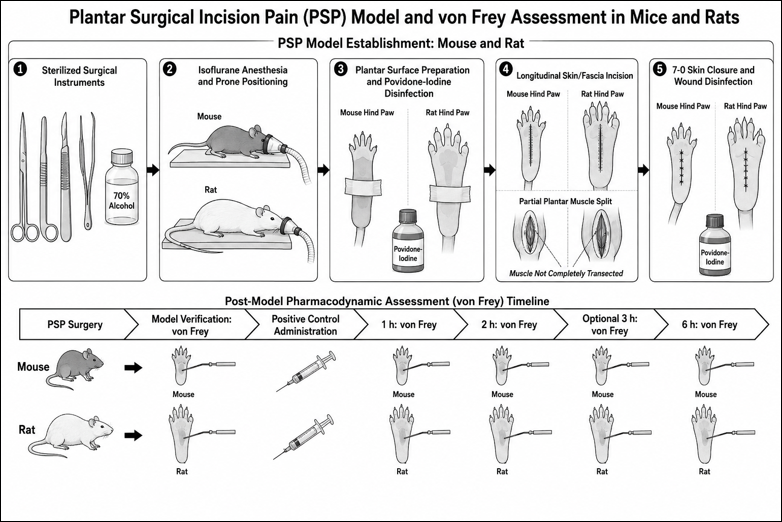
08Plantar Surgical Incision Pain (PSP) Mouse and Rat Model

The plantar surgical incision model is an established model of acute postoperative pain. Plantar incision induces local tissue injury and peripheral sensitization, resulting in transient mechanical hypersensitivity. Following model establishment, VX-548 is administered, followed by behavioral assessment of mechanical paw withdrawal threshold (PWT) with von Frey filaments to evaluate analgesic efficacy.

Experimental flow design

Experimental Flow Design of PSP Mouse and Rat Model

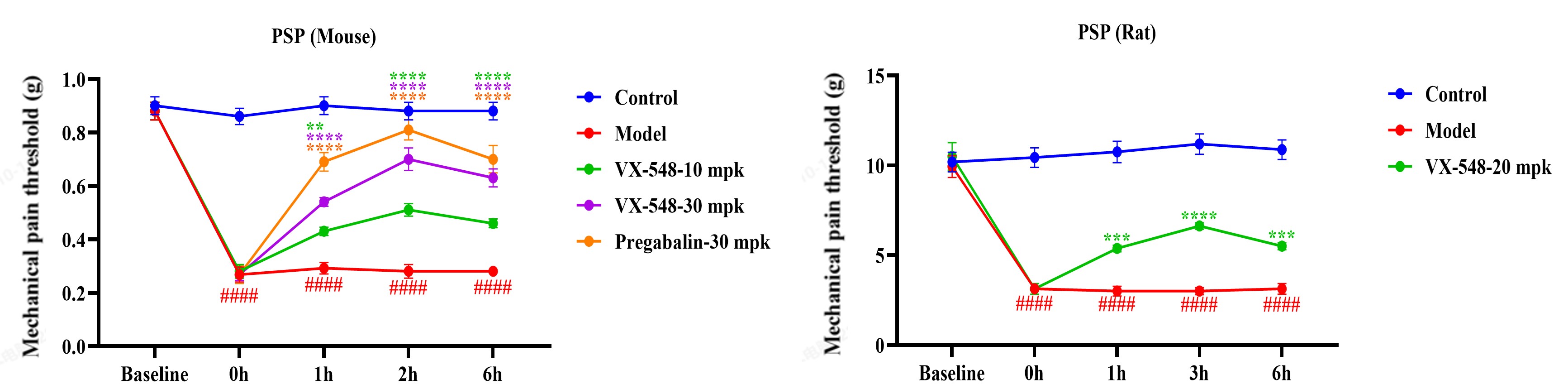
Behavioral characterization

The model was established on Day 0 and verified before dosing on Day 1. VX-548 significantly increased the mechanical paw withdrawal threshold from 1–6 hours post-dose, demonstrating robust pharmacological responsiveness of the plantar surgical incision pain model.

Behavioral characterization of the PSP mouse and rat model

09Plantar Surgical Incision Pain (PSP) Beagle Dog Model

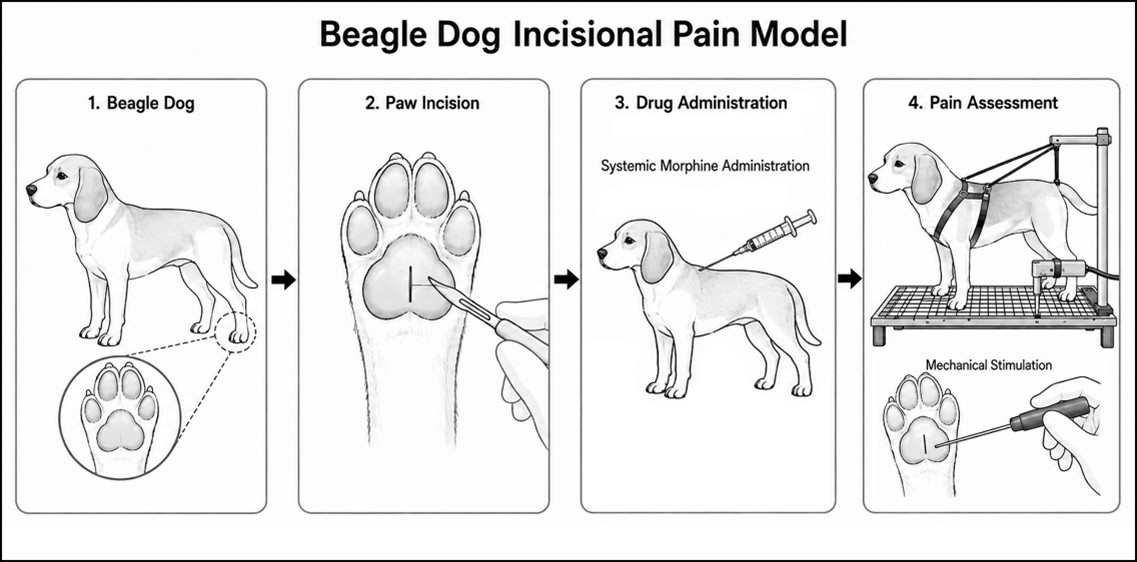
The plantar incision Beagle dog model extends the postsurgical pain platform from rodents to a large animal species. The model enables mechanical pain threshold assessment in a translational large-animal context. Following model establishment, morphine is administered through different injection routes, followed by behavioral assessment of mechanical pain threshold to evaluate analgesic efficacy.

Experimental flow design

Experimental Flow Design of PSP Beagle Dog Model

Behavioral characterization

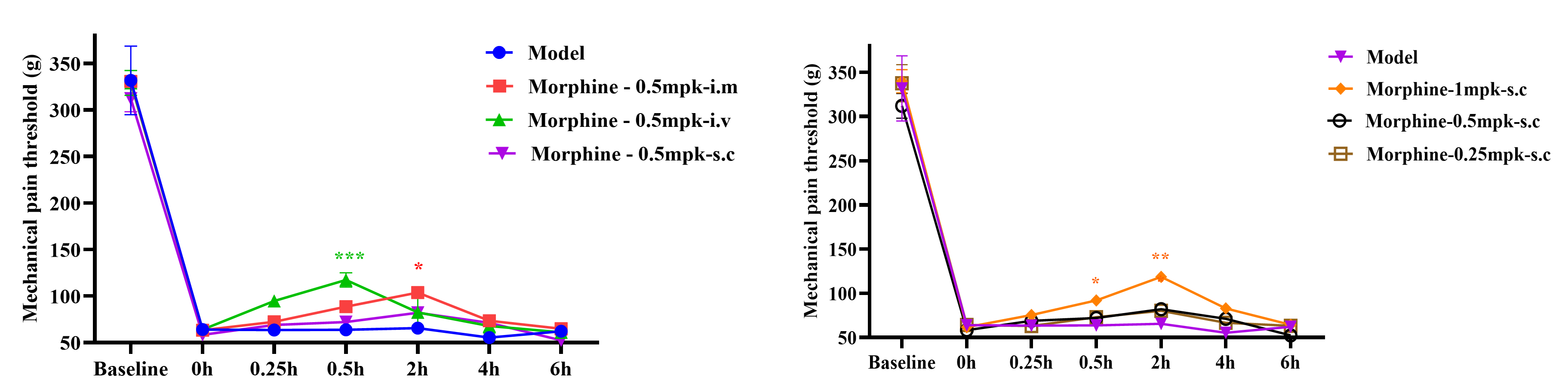
A plantar incision model was successfully established in 11- to 14-month-old Beagle dogs. Morphine administered via various injection routes significantly increased the mechanical pain threshold, demonstrating measurable pharmacological responsiveness in the non-rodent postoperative pain model for translational analgesic evaluation and route-of-administration comparison.

Behavioral characterization of the PSP Beagle dog model

10Acetic Acid-Induced Writhing Mouse Model

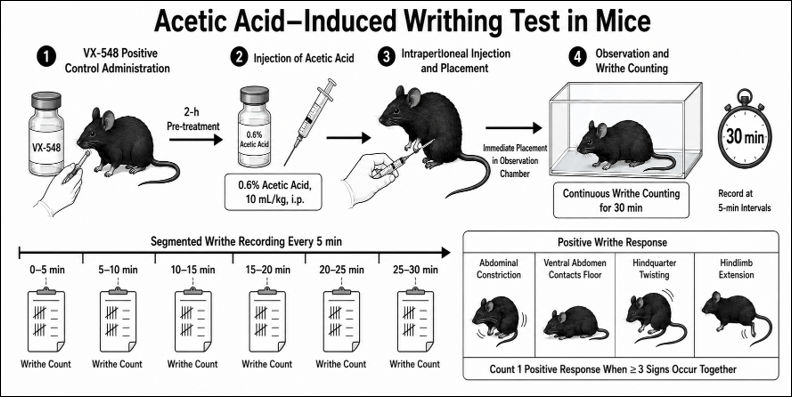
The acetic acid-induced writhing model is an established acute visceral pain model. Acetic acid administration induces visceral nociception, resulting in characteristic abdominal writhing responses. Following model establishment, VX-548 is administered, followed by behavioral assessment of the writhing response over a 30-minute observation period to evaluate analgesic efficacy.

Experimental flow design

Experimental Flow Design of Acetic Acid-Induced Writhing Mouse Model

Behavioral characterization

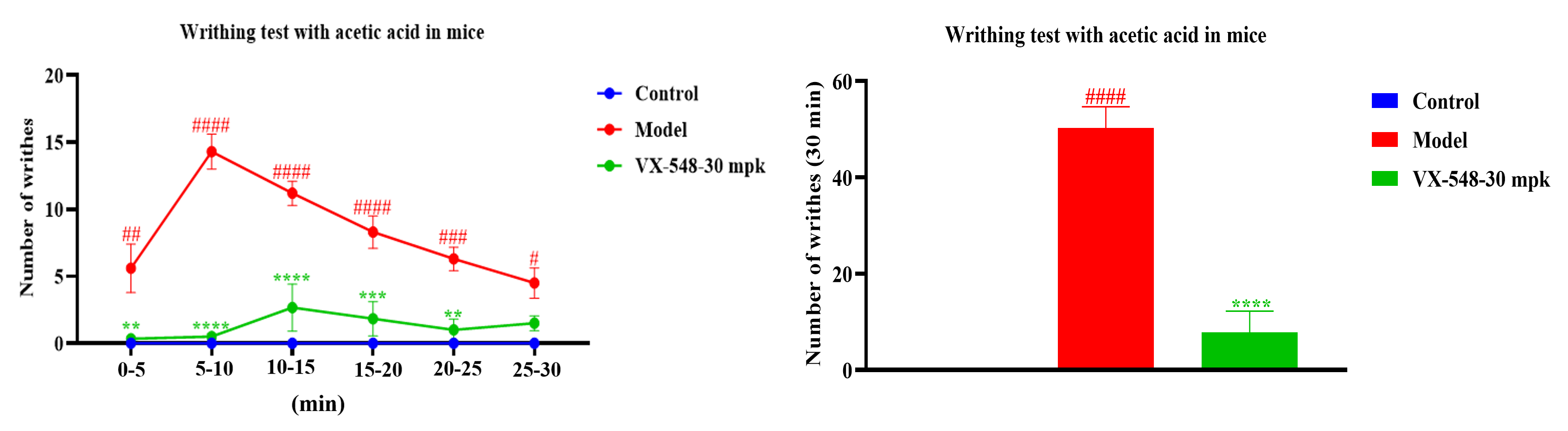
Acetic acid induced a robust writhing response that peaked during the first 0–10 minutes and gradually declined from 11 to 30 minutes. VX-548 markedly attenuated the nocifensive phenotype, demonstrating clear analgesic efficacy in this acute visceral pain model.

Behavioral characterization of the acetic acid-induced writhing mouse model

11Nitroglycerin-Induced Migraine-Like Pain Mouse Model

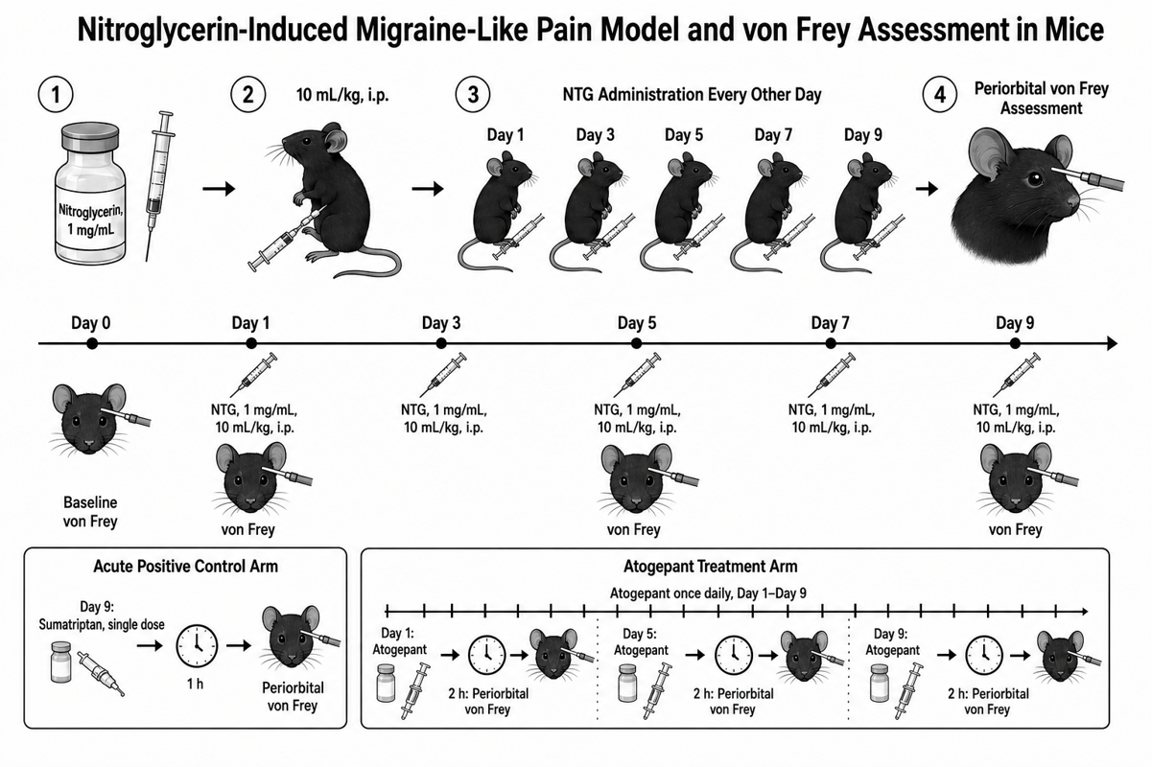
The repeated nitroglycerin model reproduces key features of migraine-like pain. Nitroglycerin activates the trigeminovascular system and promotes CGRP release, leading to sterile neurogenic inflammation and persistent periorbital mechanical hypersensitivity — a phenotype responsive to both acute and preventive migraine therapeutics. Following model establishment, sumatriptan is administered as a single dose on Day 9, while atogepant is administered repeatedly from Day 1 to Day 9, followed by von Frey assessment of periorbital mechanical withdrawal threshold on Days 1, 5, and 9.

Experimental flow design

Experimental Flow Design of Nitroglycerin-Induced Migraine-Like Pain Mouse Model

Behavioral characterization

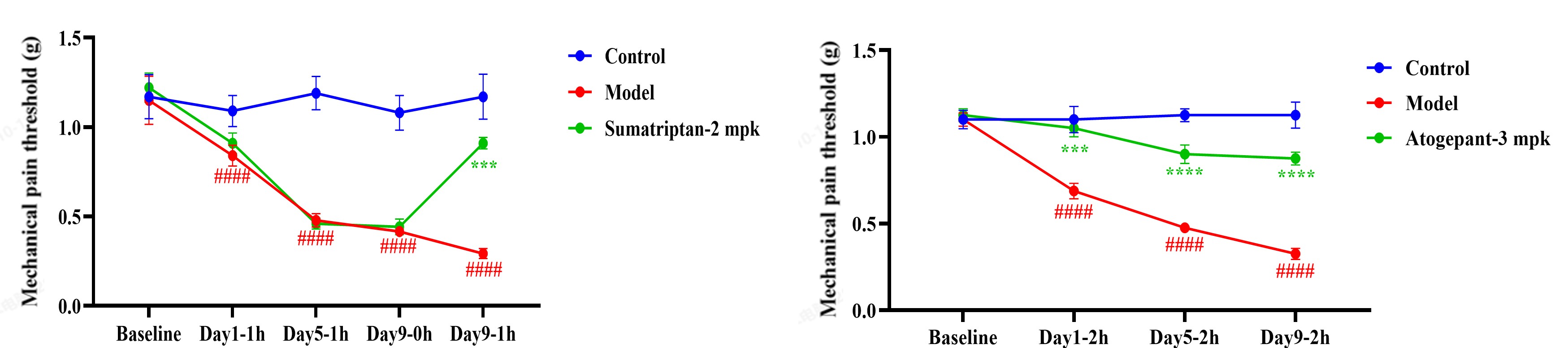
Repeated nitroglycerin administration induced periorbital mechanical hypersensitivity, with significantly reduced von Frey thresholds on Days 1, 5, and 9. Sumatriptan (single dose, Day 9) and atogepant (repeated dosing, Days 1–9; tested on Days 1, 5, and 9) each significantly increased the threshold, confirming the model's pharmacological responsiveness.

Behavioral characterization of the nitroglycerin-induced migraine-like pain mouse model

12Bone Cancer Pain Mouse Model

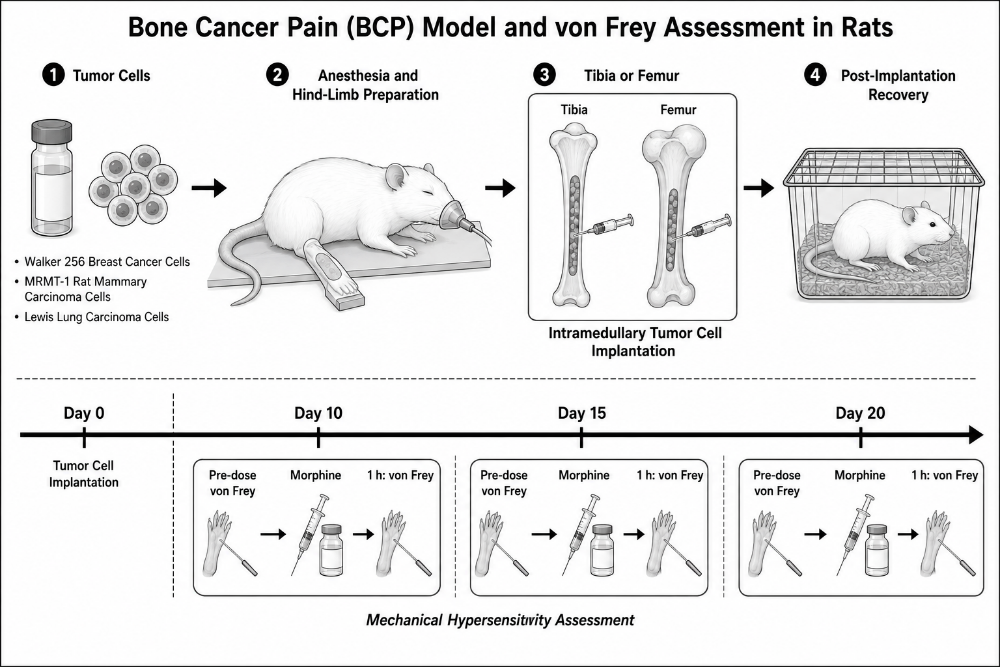
The mouse bone cancer pain (BCP) model is an established model of cancer-related pain. Intramedullary tumor cell implantation induces tumor-associated bone pathology and sensory nerve sensitization, resulting in persistent mechanical hypersensitivity. Following model establishment, morphine is administered, followed by von Frey assessment of mechanical paw withdrawal threshold to evaluate analgesic efficacy.

Experimental flow design

Experimental Flow Design of Bone Cancer Pain Mouse Model

Behavioral characterization

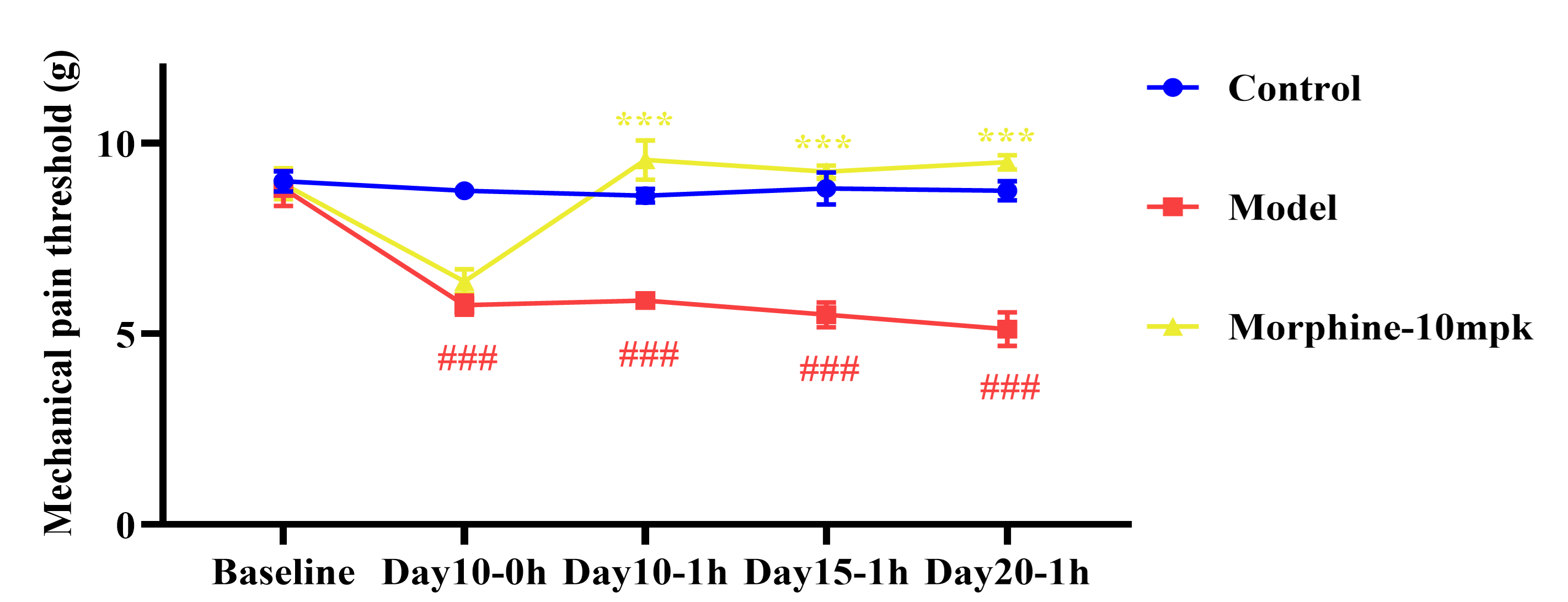
Intramedullary tumor cell implantation induced persistent mechanical hypersensitivity from Day 10 through Day 20. Morphine significantly increased the von Frey withdrawal threshold 1 hour after dosing on Days 10, 15, and 20, demonstrating sustained model stability and effective pharmacological reversal of cancer pain.

Behavioral characterization of the bone cancer pain mouse model


Contact Us

We value your inquiries and are here to provide you with tailored solutions for your drug discovery and development needs. Whether you have questions, require more information, or are interested in discussing potential collaborations, our team of experts is just a message away.
Feel free to reach out to us.

We are a CRO service organization, not a hospital


Get a quote

Go top